

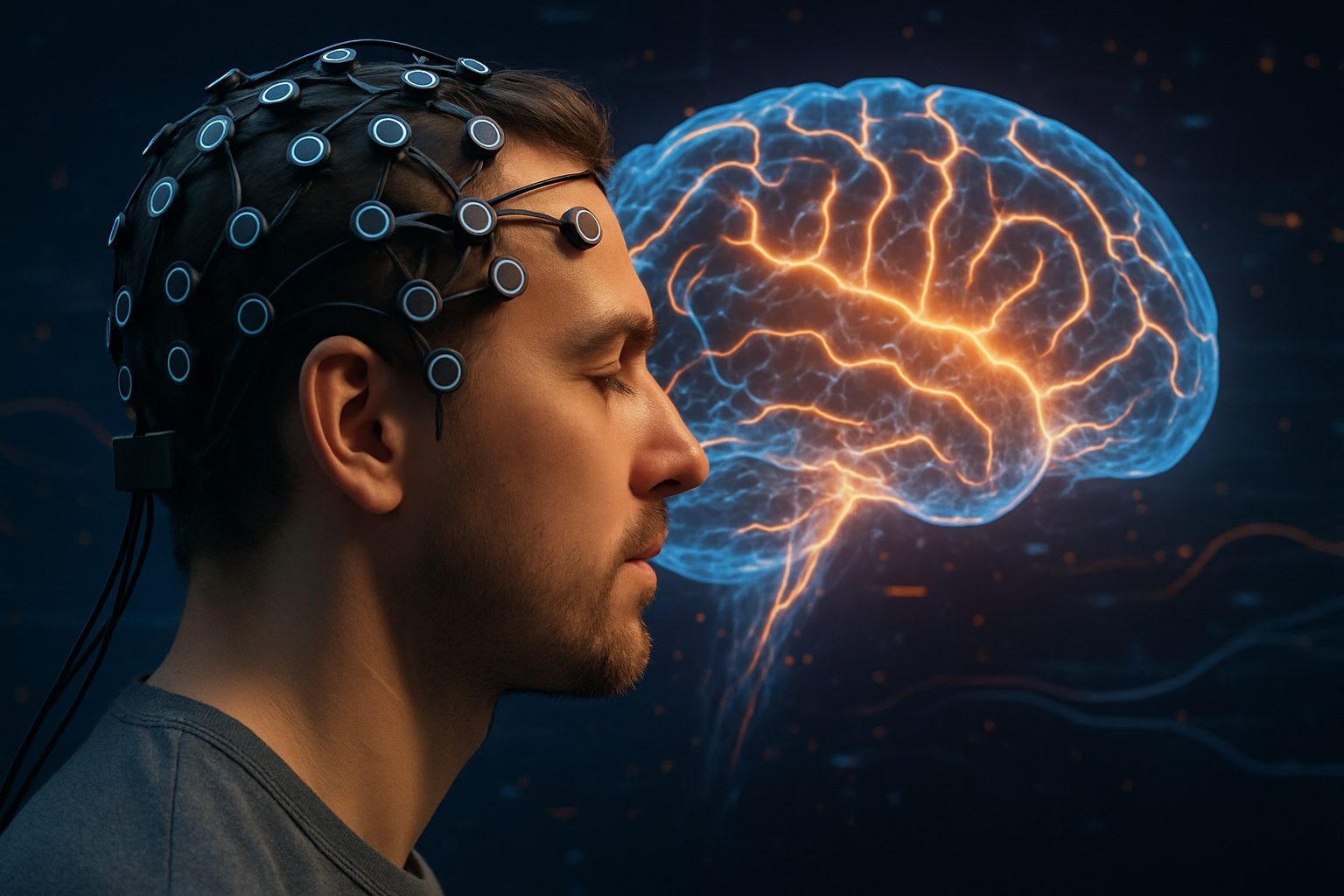
If you blinked in 2025, you might’ve missed the neurotech revolution sneaking up on us. Once the province of sci-fi novels and lab rats, neural technology now infuses major venture capital portfolios and startup roadmaps alike. This isn’t hype — it’s funding signals and real products backed by cash-rich investors who want returns and impact. Neurotech isn’t just about reading minds (although, yeah, that’s happening). It’s about solving real human challenges, rethinking healthcare, boosting human performance, and creating entirely new markets worth billions. 📈
In this piece, we dive into the 10 neurotechnology use-cases that are lighting up investor interest right now — balancing bold innovation with grounded business sense. I think you’ll find this both exciting and… slightly mind-blowing. 😄
1. Brain-Computer Interfaces (BCIs) for Loss-of-Function Recovery
Think voice and movement restored purely through thought. That’s no longer fringe science. Implantable BCIs let people with severe paralysis control devices with their minds — and major funds are flowing here. Neuralink raised $650 million as it moves devices into clinical trials — and investors are pouring cash into companies with real therapeutic potential.
It’s not just Musk’s company. Firms like Precision Neuroscience are pushing minimally invasive BCIs that collect far more neural data without a craniotomy, tackling disorders from spinal cord injury to ALS.
💡 Investor appeal: Clear clinical pathways + massive addressable markets + measurable outcomes.
2. Non-Invasive Neuroimaging & Monitoring
Not every neural revolution is surgical. Non-invasive tools (like EEG headsets and new imaging tech) let companies gather brain data for healthcare and consumer use without implants. Kernel, for example, builds non-invasive helmets that map brain activity — a beachhead into everything from cognitive performance tracking to mental fatigue detection.
This use-case sits comfortably between serious medical and lifestyle markets, which means broader adoption and less regulatory drag. 🧠📊
3. Neurostimulation for Mood, Pain, and Mental Health
Depression, chronic pain, and mood disorders are huge markets — and neurostimulation technology is beginning to deliver on them. From ultrasound-based implants being trialed in the UK to commercial devices targeting focused stimulation, investors are betting on tech that moves beyond pills and talk therapy.
Why? Because if you can modulate mood or neurological disorders with precision, you’ve unlocked a new category of therapeutic tech.
4. AI-Powered Cognitive Enhancement Tools
AI and neurotech are flirting… and investors are watching. Combining AI with brain data could unlock personalized cognitive coaching, real-time mental state monitoring, or even adaptive learning systems. Research suggests that AI-driven neural decoding could one day make interfaces more intuitive and applicable at scale.
💥 Investor wink: Think of this as the “bolt-on neuro-AI” to every wearable and app — a future revenue ladder from consumer wellness to clinical interventions.
5. Consumer NeuroTech Wearables
It’s not all deep implants — agile consumer startups dominate early-stage funding with wearable EEG headsets and related tech. These devices help track attention, stress, and even facilitate simple brain-driven interactions in real life.
Investors like this space because:
Lower risk than implants
Faster product cycles
Broader retail distribution
Data-driven recurring revenue
And yes, mainstream players sniffing around (Meta, Apple) tell you this isn’t a fad — it’s strategic future UX.
6. Neuroprosthetics & Smart Robotics
Restoring lost functions — from limb control to sensory feedback — is one of the most emotionally compelling segments. Startups partnering with agencies like DARPA are developing systems that interpret muscle memory signals to control prosthetics.
Investors love dual-use tech (civilian + defense), and this area ticks both boxes.
7. Rehabilitation & Recovery Platforms
Neurotech now supports recovery after stroke, brain injury, and motor impairment. Whether through advanced BCI-driven rehab robotics or hybrid systems that adapt in real time, this category turns clinical evidence into sustained patient outcomes — an alluring narrative for healthcare funds.
Here’s the simple math: more effective rehab = lower long-term healthcare costs, which insurers increasingly value.
8. Neural Data Analytics & Brain Biomarkers
We generate a ton of neural signals. The companies that clean, decode, and make sense of them are pure infrastructure plays. Think of startups that build brain activity patterns into actionable insights for clinicians or product developers.
Investors know: data = future insights = recurring revenue.
9. Mental Wellness & Stress Management Solutions
Mental wellness is a multi-billion-dollar market, and neurotech tools — from biofeedback headsets to guided neurofeedback apps — are carving out a premium slice. Because this overlaps healthcare, consumer tech, and software, it attracts blended investor interest across VC, health funds, and even corporate wellness budgets.
10. Brain-Driven Entertainment & Human-Machine Interfaces
Yes, gaming with your mind sounds ludicrous — but investors aren’t stupid. The real opportunity here isn’t sci-fi telepathy; it’s better accessibility controls, intuitive UX for immersive experiences, and entirely new categories of interactive content. Neural interfaces in mixed reality could rewrite how we game, create, and interact with machines.
This is future UX — next-level human-computer interaction.
Also read: 7 Business Models That Actually Work In NeuroTech
Final Thoughts: Why Now? 🚀
The neurotech ecosystem isn’t just innovating — it’s maturing. Over the past year, funding has poured into both hardcore clinical players and consumer-oriented ventures, showing investors are serious about returns and real-world impact.
But it’s not without challenges — ethical concerns around neural privacy, equitable access, and regulation are gaining attention as the field moves toward mainstream adoption.
Still… the moment is now. And the opportunities? Deep, diverse, and potentially life-changing.