

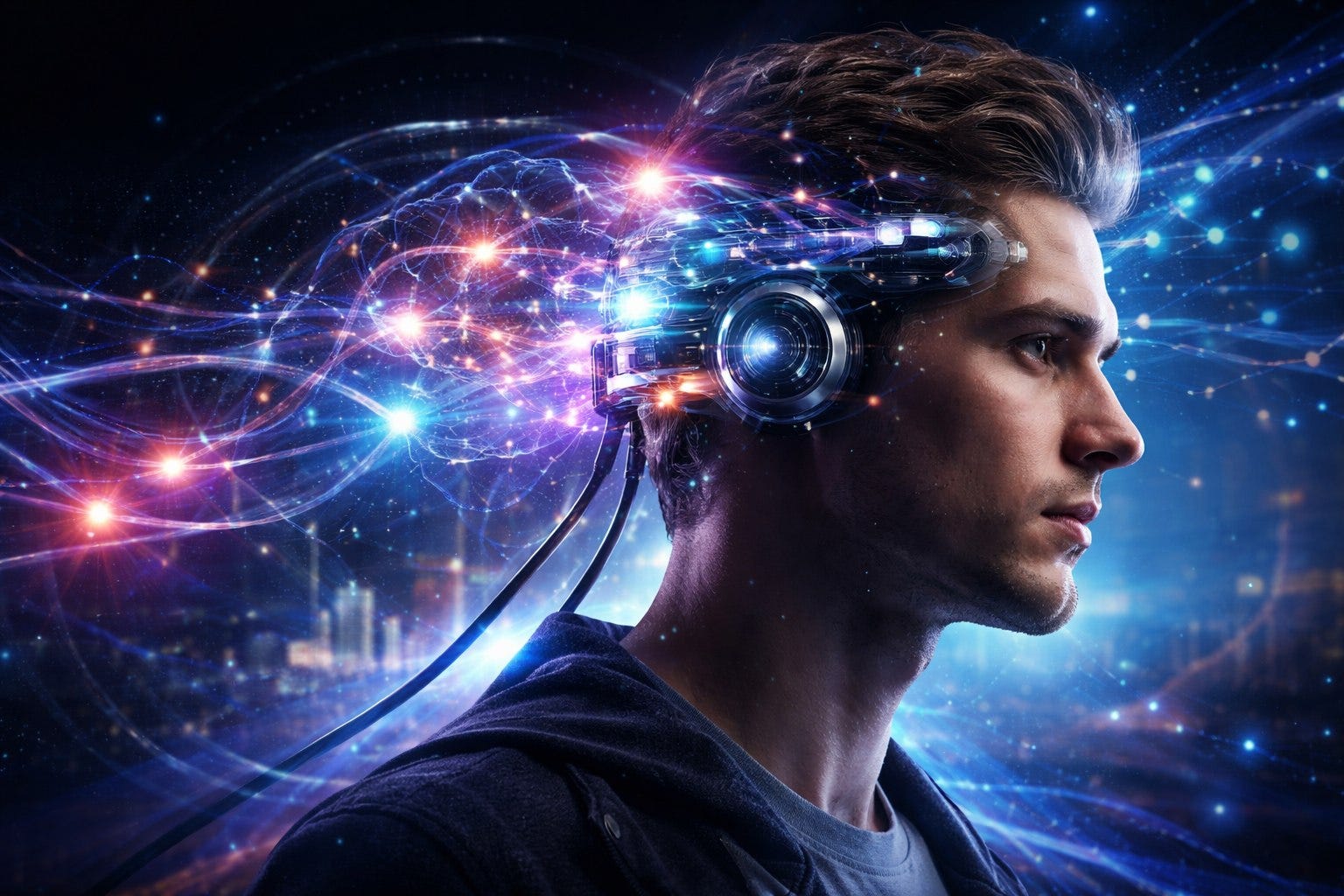
Welcome to the Twilight Zone — but make it real. Neurotechnology used to live in the pages of Neuromancer and Black Mirror. Today, it lives in labs, startups, and even clinical trials. Once fringe and speculative, these breakthroughs are now measurable, tested, and often life-changing. And no — they aren’t just cool videos you share in group chats. They’re here. Right now.
Let’s explore five neurotech advancements that read like sci-fi but are grounded in serious science and backed by multiple credible sources. Grab a snack — and brace your mind.
1. Brain-Computer Interfaces That Decode Thought Into Action 🧠➡️💻
Imagine controlling a computer or machine with mere thought. No clicks. No taps. No voice commands. This sounds like the telepathy gizmo Tony Stark would debug between espresso shots, yet it’s happening.
Companies like Neuralink and Paradromics are building interfaces that connect brain signals with computers, enabling people with paralysis to operate cursors and communicate purely via thought. These systems interpret electrical activity from neurons and translate intent into real-world commands.
In fact, the FDA has approved clinical trials for Paradromics’ BCI system aimed at speech restoration, where participants will attempt to communicate by converting brain activity into text or synthesized speech — a stunning leap forward.
Why it feels sci-fi: Thought control over machines is something we usually only see in movies.
Why it’s real: BCIs are live in human trials and showing measurable outcomes.
2. Non-Invasive Neural Tech — No Surgery Required 😮🎮
But wait — you don’t need to crack open a skull to hop on this neural bandwagon.
At CES 2026, neurotech startup LumiMind showcased consumer-ready non-invasive brain-computer interfaces capable of decoding brain signals in real time. One demo let someone play a complex video game solely through neural decoding.
Even more grounded: LumiMind’s LumiSleep device uses EEG (which reads brain waves from the outside) to monitor the brain as you fall asleep and adapts sound to your neural rhythm — nudging your sleep into a deeper, more restorative mode.
This shift from invasive implants to consumer wearables is a big deal — think sleep optimization and thought-based interaction without scalp surgery.
3. Ultrasound Neurotech: Reading and Writing Thoughts with Sound Waves 🎶🔊
Okay, this one sounds utterly wild: ultrasound devices that interpret — and potentially modulate — brain activity.
Merge Labs, co-founded by Sam Altman (yes, that Sam Altman), is developing non-implant ultrasound brain-computer tech that doesn’t poke wires into your grey matter. Instead, it sends and receives information using focused sound waves that penetrate the skull.
This is more than just cool tech: ultrasound has the potential to tap into deep brain regions while avoiding the risks of electrode insertion. Imagine a future where your “neural interface” is more like a harmless headset than a surgical device.
Sci-fi level: 🎯 High-resolution mind reading without surgery.
Reality score: 🧠 Companies are testing this in early safety trials.
4. Wireless Silicon Brain Chips: The Network Inside Your Head 📡🧠
Hold onto your neural connectors: researchers recently reported ultra-thin silicon implants that create high-bandwidth, wireless links between the brain and computers. These chips pack tens of thousands of electrodes but can be inserted through a small opening — much less invasive than older systems.
Why this is huge: It means richer, faster neural data without massive hardware. More thought detail. Better control. Broader capabilities.
Use cases? Potentially treating epilepsy, restoring movement, or even one day helping repair sensory functions like sight or touch. This is the kind of thing that used to appear in speculative fiction — now it’s published science.
5. Speech from the Mind: Real-Time Neural Communication 🎤🧠
Here’s where sci-fi really meets human storytelling. Researchers have developed systems where a person who hasn’t spoken in years used a brain implant to stream their thoughts as fluent speech in real time. This isn’t slow or awkward — it’s approaching natural conversation.
Translated to everyday language: someone who couldn’t speak for nearly two decades regained a voice through neurotech. This isn’t a gimmick. It’s restoration of a human right — speech.
That’s powerful. And kind of unreal.
The Neurotech Reality Check: Ethical, Exciting, and Uneven ⚖️
Before you start imagining a future where everyone’s thoughts are open books — slow down. Ethical and privacy concerns are massive. UNESCO has just adopted global standards to protect mental privacy and neural data, recognizing how sensitive brain information truly is.
And although these technologies are advancing fast, widespread consumer-grade BCI gadgets aren’t yet mainstream. Many breakthroughs are still in clinical or early-stage research phases.
But let’s not diminish progress: neurotech isn’t a future concept anymore. It’s a present-day transformation with real people’s lives hanging in the balance.
Also read: 5 Big Bets On The Future Of Brain-Machine Interfaces
Why You Should Care 💡
Whether you’re a tech enthusiast, a medical futurist, or someone who just likes cool gadgets, now’s the moment to pay attention. Neurotechnology is reshaping:
✨ Accessibility — giving voice and movement back to people who lost them.
🧠 Daily life — from consumer sleep aids to thought-enabled control.
🔐 Ethics — forcing society to ask what it means to read minds.
We’re still early in this journey. But those sci-fi headlines? Many are already history.