

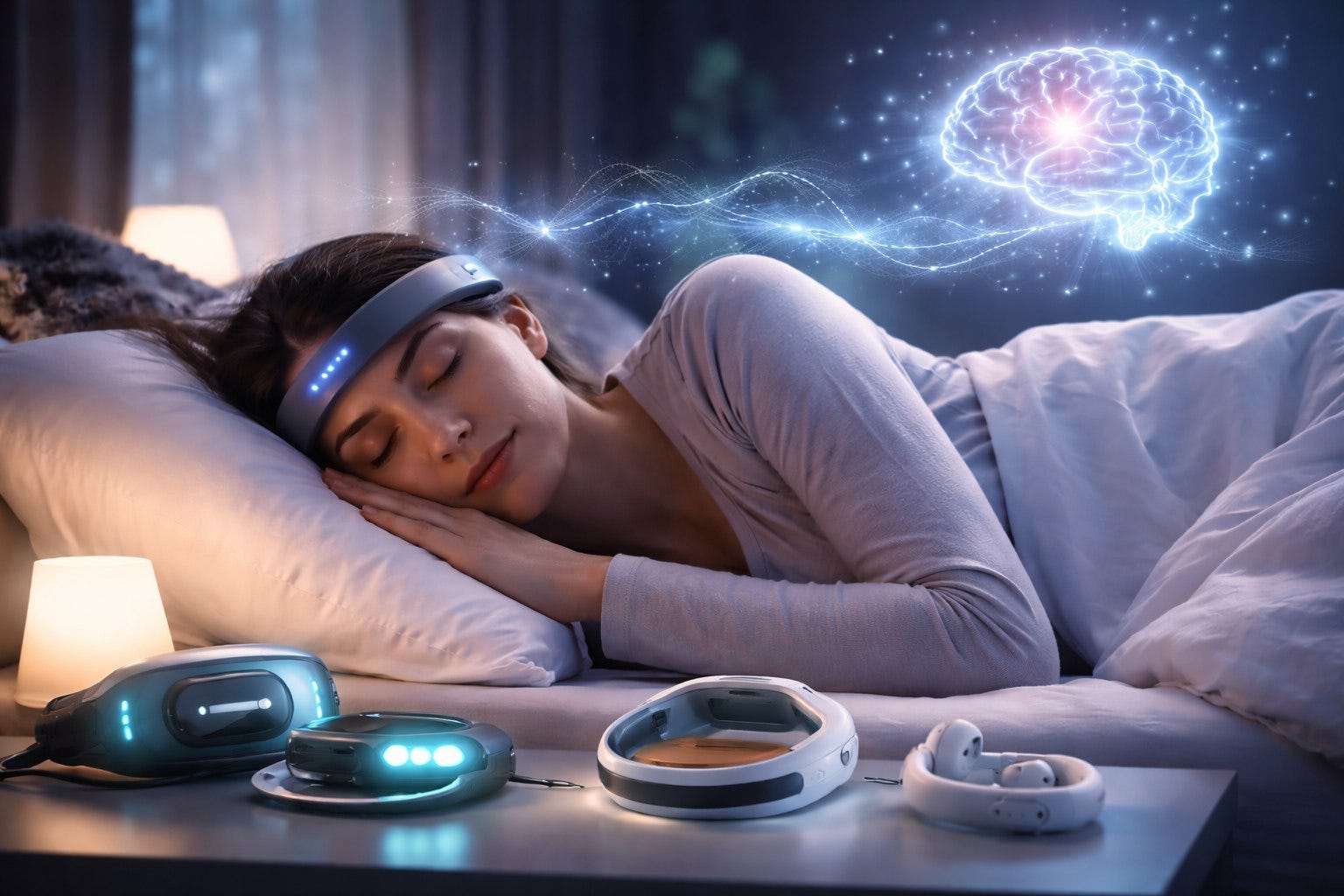
Sleep is sacred. It’s that elusive oasis we chase after a long day — and too often, it slips through our fingers. But what if the secret to deeper, more restorative Z’s isn’t another lavender-scented candle or a fancy mattress topper? What if it’s neurotechnology — gear that actually talks to your brain and nervous system to nudge you into better sleep? Welcome to the next frontier of sleep improvement. In this guide, we explore five cutting-edge neurotech tools that might help you sleep better in 30 days — and do it without drugs, bulky machines, or hours of self-soothing apps. 🔬✨
We’ve mined the latest research, clinical studies, and tech trends to bring you tools that blend neuroscience with real-world sleep support. Whether you battle insomnia, restless nights, or just want a smarter wind-down ritual, there’s likely something here for you.
1. Elemind — The Headband That Teaches Your Brain to Sleep Faster 🧠💤
Imagine a headband that doesn’t just track your sleep — it actively modulates your brainwaves to help you fall asleep faster. That’s the promise behind Elemind, a neurotech headband built for nightly use. It uses EEG measurements to read your brain’s activity and deliver tailored acoustic signals intended to reduce wakeful brain rhythms and promote sleep-friendly waves.
In clinical research cited by the company, 76% of participants fell asleep significantly faster when using Elemind — on average 48% faster than without it. Some users even see a 74% improvement in sleep onset time. While results vary, that kind of impact suggests the technology might rewire your bedtime routine for the better.
👉 Best for: people who struggle to fall asleep and want an active, neuroscience-backed approach.
2. Somnee — Personalized Neurostimulation to Calm Your Mind 🧠⚡
If personalized tech gets your attention, Somnee might feel like a dream come true. This wearable headband combines EEG sensing with gentle electrical stimulation (tACS) designed to quiet the mental noise that keeps you awake. Over about 15 minutes before bed, Somnee maps your brain activity and delivers individualized stimulation to encourage sleep readiness.
In real-world reviews, users report falling asleep more quickly, though the main benefit often comes from establishing a consistent pre-sleep ritual. Some testers note that the real win wasn’t the stimulation alone — it was training their body and mind to recognize bedtime.
👉 Best for: folks who want a personalized, neuro-responsive sleep trigger and who value sleep routine consistency.
3. Pulsetto — Vagus Nerve Stimulation for Stress + Sleep 🌙📶
Your vagus nerve is a major sleep influencer. It’s part of your body’s “rest and digest” system, and stimulating it can calm your nervous system. Pulsetto is a wearable device designed to deliver transcutaneous vagus nerve stimulation (tVNS) via gentle electrical pulses around your neck.
While Pulsetto isn’t a magical sleep button, scientific research shows that stimulating the vagus nerve can help reduce stress and promote relaxation — both of which are critical for falling asleep and staying asleep. According to 2025 coverage, users can choose tailored stimulation programs for stress, sleep, anxiety, and more.
👉 Best for: people whose sleep trouble stems from stress, overstimulation, or racing thoughts.
4. Sleep Frequency Pro — A Wrist-based Neuro-Biofeedback Solution 📈⏱️
What if your sleep tech didn’t belong on your head at all? Sleep Frequency Pro is a wrist-worn wearable that blends neuro-biofeedback, magnetic wave modulation, and targeted frequency delivery to tackle sleep issues like anxiety and stress. This device isn’t just a tracker — it’s designed to influence physiological states that can interfere with restful sleep.
By combining neurofeedback with calming frequencies, the goal is to train your body toward better sleep patterns rather than merely monitor them. It sits comfortably on your wrist and works to make a holistic impact on your sleep cycle.
👉 Best for: people who want multisensory sleep modulation without headgear.
5. Muse Headband — Brainwave Tracking Meets Mindful Relaxation 🎧📊
Not every neurotech sleep tool stimulates you — sometimes the key is insight. Muse is a brain activity sensing headband that turns EEG signals into real-time audio feedback. When your brain is calm, you hear gentle sounds (like tweeting birds); when it’s more active, the soundscape intensifies.
The result? A biofeedback experience that helps you learn when your mind is primed for rest. You don’t get electrical stimulation, but you do get data and cues that help you understand and adjust your mental state. It’s a subtle approach, but for many users, awareness is the ingredient that finally unlocks consistent sleep.
👉 Best for: self-quantifiers, data lovers, and people who want to train their brain toward calmness.
So… Can These Really Improve Your Sleep in 30 Days? 🤔
Here’s the honest takeaway: neurotech is still emerging but promising. A growing body of research indicates that devices which measure, modulate, or feedback brain activity could genuinely influence sleep patterns — from brainwave stimulation to vagus nerve engagement and real-time biofeedback.
Not every tool works the same for everyone, and “results may vary” isn’t just a polite disclaimer — it’s the reality of personal neurophysiology. But if you’re tired of tossing and turning, these tools give real science a seat at your bedside table.
Also read: 7 Everyday Ways How Neurotech Can Improve Your Focus (Without Becoming a Cyborg)
Ready to Try Neurotech Sleep?
Sleep tech is evolving fast, and 2026 promises even cooler innovations (CES just showcased some jaw-droppers 🛋️🔥). Whether you choose brainwave modulation, vagus stimulation, or feedback-based awareness, the key is consistency. Pair these tools with good sleep hygiene — consistent schedule, dark room, wind-down routine — and you might just be shutting your eyes for good each night. 🛌💫