

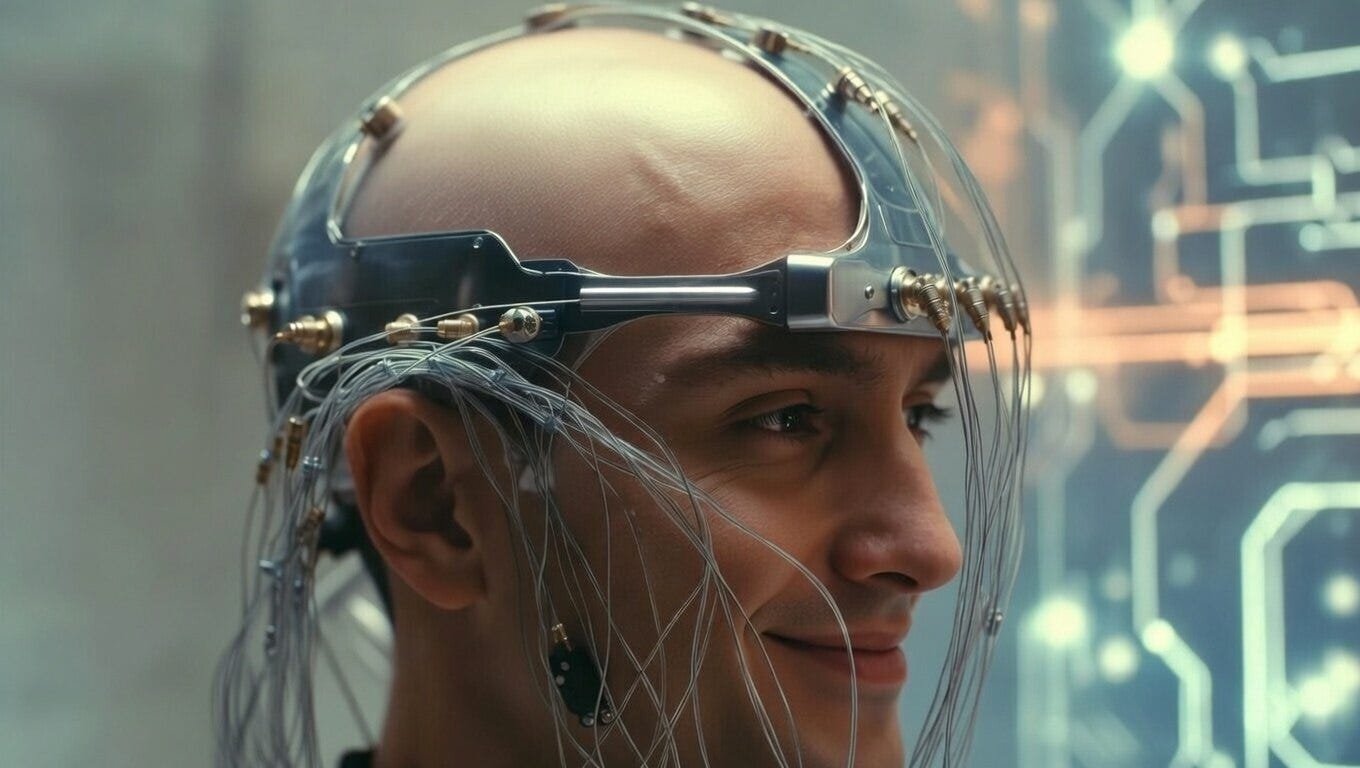
Imagine a world where a tiny implant lets someone paralyzed type at 90 words per minute just by thinking. Or where your morning coffee comes with a side of perfect focus, courtesy of a non-invasive headband. Neurotech is no longer sci-fi - it’s here, raising billions and promising to rewrite what human capability means. But here’s the catch: for every Neuralink headline that makes you want to throw money at the screen, there’s a graveyard of startups that burned cash, faced FDA delays, or quietly folded when the “breakthrough” turned out to be a long shot. 😬
Investing in neurotech right now feels like standing at the edge of a gold rush with a metal detector that sometimes beeps at fool’s gold. The market is exploding -- BCI alone is headed toward $2.11 billion by 2030, and the broader neurotech sector could hit nearly $30 billion. Yet most investors still get dazzled by robot surgeons and Elon tweets instead of asking the questions that actually matter. Here are the five I always run through before even opening a term sheet.
1. Is the science rock-solid, or are we still in “trust me, bro” territory?
Proof isn’t a glossy deck or a monkey playing Pong. You want peer-reviewed preclinical data, clear metrics on signal quality, biocompatibility, and -- crucially -- long-term stability. Does the device still work after months or years in a living brain, or does scar tissue eventually kill the signal? (Hello, “butcher ratio” problem that has haunted rigid electrode arrays for decades.)
Look for zero or near-zero tissue damage, wireless operation, and real human data if they have it. Synchron’s stent-like approach slides into a blood vessel -- no craniotomy, no brain poking -- and already lets people with ALS control iPads by thought. Neuralink’s threads are sexier on paper but have shown retraction issues in early patients. If the founder can’t walk you through failure modes and mitigation data without dodging, walk away. Science this hard doesn’t forgive hand-waving. 🚩
2. How real is the regulatory path -- FDA, EMA, or just wishful thinking?
Most neurotech devices are Class III. That means Pre-Market Approval, not a quick 510(k). Breakthrough Device designation can shave time, but it’s no guarantee. Ask: How many patients in first-in-human? What’s the primary endpoint? Do they have an IDE? Real talk -- many startups quote “we expect approval in 2027” the way I quote “I’ll finish my novel by next summer.”
Precision Neuroscience just got 510(k) clearance for temporary use of its thin-film array; that’s a real milestone. Subsense, the nanoparticle BCI that raised $17M in early 2025, is still testing in mice and openly admits consumer super-vision is a decade away at best. If the timeline slides more than once, the burn rate will eat the company alive before regulators ever say yes. Demand the actual FDA correspondence, not the PR version. 🧠
3. Does the team actually know what they’re doing, or are they just really good at raising money?
Neurotech is brutally interdisciplinary: neurosurgeons, materials scientists, signal-processing PhDs, regulatory veterans, and people who’ve shipped implantable hardware before. A solo-founder neuroscientist with a great story but zero implant experience? Cute, but probably not the one to scale this.
Look for ex-Blackrock, ex-Neuralink, or ex-Medtronic people who’ve lived through the failures. Teams that have already navigated one IDE or PMA are worth their weight in platinum. And check retention plans -- top talent in this space gets poached constantly. If half the scientific advisory board is just lending their name for the deck, that’s a red flag wrapped in a bow.
4. What’s the actual addressable market, and who else is already eating it?
“$400 billion opportunity” sounds great until you realize most of it is still theoretical consumer enhancement, not reimbursed medical use. Start with the boring stuff: which specific indication? How many patients? What’s the reimbursement pathway? Deep-brain stimulation for Parkinson’s is a billion-dollar market because Medicare pays; thought-controlled cursors for healthy gamers probably aren’t (yet).
Competition is fierce. Neuralink gets the headlines, but Synchron, Paradromics, Blackrock, Precision, and even biohybrid plays like Science Corporation are all gunning for the same patients. Ask: What’s your moat -- IP that actually holds up in litigation, a surgical advantage, or just “we’re faster”? And does the business model survive if insurance only covers the sickest 10% for the next decade?
5. Have they thought about the ethical landmines, or are they hoping nobody notices until it’s too late?
Neural data is the most intimate information on earth. UNESCO just dropped the first global ethical framework in November 2025 -- mental privacy, informed consent, protection against workplace coercion, no behavioral manipulation. Ignore this at your peril. Investors are starting to ask: Who owns the data? What happens if the company gets acquired or goes bankrupt? Can users revoke consent later?
Companies that treat ethics as a checkbox (”we have a privacy policy”) are the ones that will get sued or regulated into oblivion. The ones that bake in privacy-by-design, transparent data governance, and patient advisory boards from day one? Those are the future leaders.
So… ready to wire the money?
Neurotech is probably the most exciting investment frontier since the smartphone. It can restore sight, speech, movement, and maybe even aspects of cognition we haven’t dared dream about. But the graveyard of over-hyped medtech is littered with companies that had amazing demos and terrible diligence.
Ask these five questions. Demand evidence, not vision. And remember: the brain is the final frontier, but it doesn’t hand out participation trophies.