

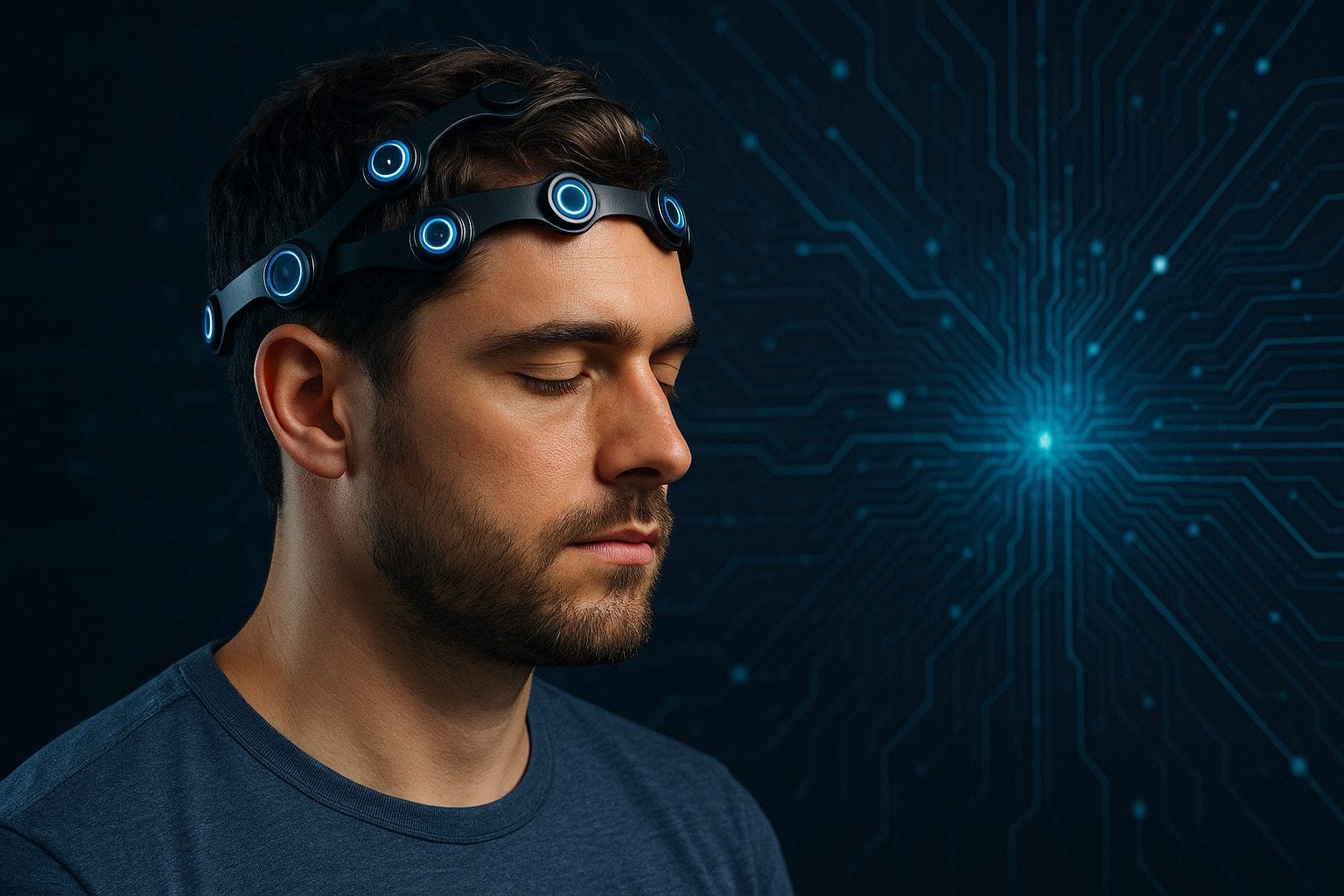
Imagine controlling your phone, computer—or even your home lights—with nothing but thoughts. No taps, no swipes, no keyboards. Just your brain. That idea isn’t science fiction anymore. It’s becoming reality — and fast. The neurotechnology revolution is quietly (or maybe not so quietly) gathering momentum. From medical breakthroughs to consumer gadgets, the tools that bridge mind and machine are evolving with breathtaking speed.
If you’re not watching it yet, you might soon be looking back, wondering how you missed the beginning. Because I think neurotech is poised to be the next big tech wave. Here are five clear signs that this is happening — and what you might do now to ride the wave instead of getting washed away. 🌊
1. Explosive market growth — money talks
The business numbers are hard to ignore. The global market for brain-computer interfaces (BCIs) is already valued in the billions of dollars, and projections send it soaring.
Some forecasts estimate growth from roughly USD 2.4 billion in 2025 to over USD 6 billion by 2032, a compound annual growth rate (CAGR) of about 14.4%. Others go even further: a nearly 20-year growth scenario pushes the neurotech market into tens of billions by the 2030s.
Investors — both private and institutional — are putting serious money behind this vision. When capital flows this massively, you know it’s not just hype.
Why that matters: market size attracts talent, fuels competition, accelerates innovation. Once you hit the “billion-dollar market” inflection, tech waves tend to build fast and break hard.
What you could do today: start following neurotech-focused investment funds, track startup funding rounds, or — if you’re entrepreneurial — explore how neurotech might intersect with your own projects (hello, BestAITools ✋).
2. Real, tangible breakthroughs — not just lab demos
Not long ago, BCIs lived in the realm of sci-fi speculation. Now they’re delivering real outcomes for real people.
Recent studies and clinical trials show BCIs helping restore speech, movement, and communication for individuals with paralysis, neurological disorders, or brain injuries.
Even more: neurotech doesn’t limit itself to the severely disabled. There’s growing development in neurorehabilitation, cognitive monitoring, and mental-health support — opening doors far beyond traditional “assistive tech.”
Why that matters: Once tech crosses from “improbable” to “impactful,” adoption curves steepen. Mainstream stakeholders (hospitals, regulators, even consumers) start paying attention. And that changes the game.
What you could do now: keep an eye on clinical trial results, regulatory approvals, and new use cases. The first wave of adopters will likely coin new standards — and standards often become the bedrock for mass adoption.
3. Diversifying uses — beyond healthcare into daily life
Today’s BCIs are no longer limited to medical rehabilitation. The technology is branching everywhere. Think gaming, smart homes, mental-wellness tools, productivity enhancers, and even consumer electronics.
Non-invasive BCIs (like EEG headsets) are becoming more sophisticated and accessible, making brain–device communication safer and more practical for everyday users.
There is even speculation that neurotech could fuse with augmented reality, wearables, and IoT — creating a whole new interaction paradigm.
Why that matters: Widespread use cases mean more than just niche adoption. When neurotech becomes relevant to everyday tasks — not just therapy — it unlocks mainstream momentum.
What you could do now: think about how BCIs might integrate into your life or work. As you build businesses or evaluate tech trends (like on BestAITools), imagine neurotech-enabled versions of existing tools — maybe it’s not far off.
4. Cross-disciplinary innovation — AI, chips, neuroscience all converge
The accelerating pace of neurotech isn’t just due to better electrodes or surgical finesse. It’s driven by breakthroughs across AI, signal processing, materials science, and computational neuroscience.
Modern BCIs increasingly rely on machine learning to decode neural signals in real time — translating thought into action with higher accuracy and lower latency.
This merging of disciplines turns neurotech into a “platform” technology — an infrastructure that other innovations build on. That’s when it stops being just a gadget and starts being an ecosystem.
Why that matters: Platform technologies scale. They attract developers, standardization efforts, partnerships, and eventually — mass adoption.
What you could do now: If you’re into AI and ML (as many of your audience are), start thinking about how neurodata could feed into new models or experiences. Early-stage neurotech + AI mashups might be early winners.
5. Ethical, regulatory, and societal focus — stakes are high, but so is seriousness
With great power comes great responsibility — and neurotech has plenty of both. As this field surges, regulators, ethicists, and global institutions are stepping in.
The global neurotechnology market is projected to surpass USD $20–50 billion by 2030–2034. That kind of scale draws attention — not only from investors, but also from governments, regulators, and public-interest groups.
That scrutiny is good. It signals that neurotech isn’t just wild speculation — it’s considered serious infrastructure-level innovation. And when regulation and standards begin, adoption often expands.
Why that matters: Ethical and regulatory clarity reduces friction for developers, investors, and users. It builds legitimacy. And where there’s legitimacy, there’s growth.
What you could do now: start reading — understand the debates around neural data privacy, consent, security. If you engage early, you might help shape — or at least anticipate — the standards that govern the future.
🧭 So… what should you do to prepare (or take advantage)?
Follow the money. Track funding rounds, major investments, report releases. That tells you where the next breakthroughs may come.
Watch clinical-trial results and regulation. New approvals or guidelines often mark turning points for mass adoption.
Think cross-domain. If you work with AI, media, longevity — neurotech might intersect dramatically with your interests.
Read the ethics debates. Understand neural-data privacy, consent, and security now. It will shape how the industry evolves.
Be curious. Subscribe to neurotech newsletters, follow promising startups, join online communities. Early adopters often get the best vantage points.
Final thoughts
Neurotech is no longer a fringe curiosity. It’s fast becoming a foundation for the next generation of human-machine interaction. Whether we end up controlling apps with thought, regenerating lost capabilities, or augmenting cognition — one thing seems certain: this isn’t just another tech wave. It’s a tectonic shift.
Will you catch it?