

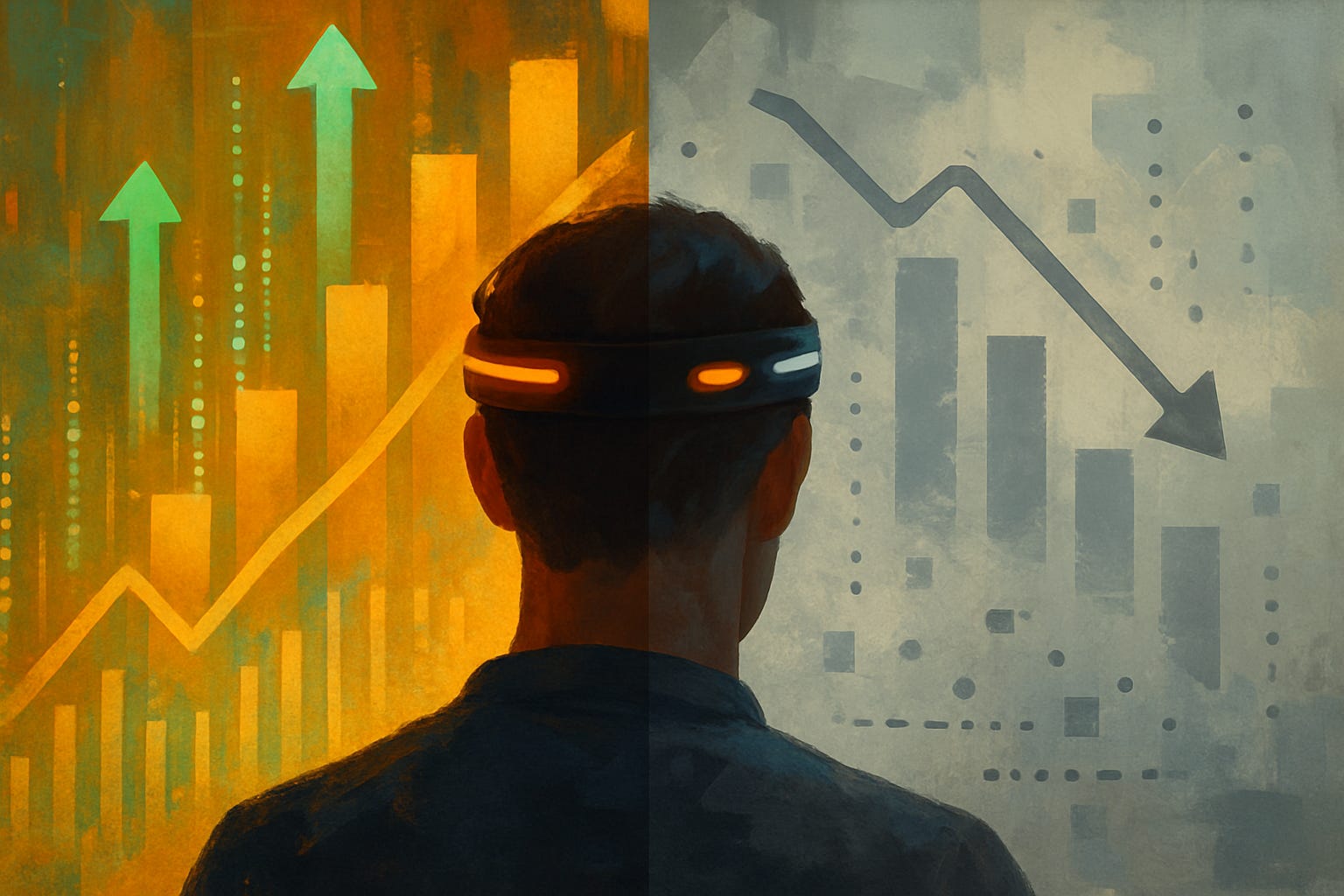
Somewhere in a benefits portal near you, a neurotech wellness perk sits next to the gym discount and the meditation app 🧠. It is a dry-electrode EEG headband, a pair of EEG earbuds, or a sleep wearable. Someone in HR approved it after a slide deck full of “focus score” charts.
Here is the catch. This is a consumer wellness product, not a medical one. There are no implants, no IDE trial phase, and no FDA clearance for any condition. That gap decides what the device can honestly tell you, and it decides whether your program works or just runs ⚡. Below are five signs it works and three signs it does not. Keep a tally as you read.
What you are actually buying
Start with the hardware, because the specs are modest. The Muse 2 is a four-channel dry-electrode headband. A 2024 study in Sensors with 37 participants found it can capture the N400 effect (a brain response to unexpected words) over a right frontal electrode. That is a real result 🔬. It is also a seated lab task, which is a long way from an open-plan office. An earlier study of lecture audiences called the usefulness of consumer headbands like Muse “extremely limited” outside laboratory conditions.
The sleep side is similar. Elemind’s headband uses three frontal EEG electrodes and bone-conduction audio to deliver pink noise timed to alpha waves. The company reports that 76% of trial participants fell asleep faster, by an average of 48%. Sleep Review notes that the supporting study is small, the cross-validation against a Nox A1S sleep system is unpublished, and the device is not FDA-cleared to treat any sleep disorder.
Sort what you have into the right bucket:
Commercially available, general wellness: Muse-style EEG headbands and Elemind’s sleep headband. Nothing here is cleared to diagnose or treat.
Lab validation on narrow tasks: the Muse N400 work. It is a paper result, not a workplace result.
Company-reported trial data: Elemind’s 76% figure. Treat it as a vendor claim until independent replication shows up.
Medical BCI: Neuralink and similar implant trials. This is a different regulatory universe, and it is not what your employees are wearing 🚀.
The FDA reinforced the wellness line in its January 2026 update to the general wellness guidance. Labeling should not suggest a product is medical or clinical grade. Pull up your vendor’s materials and look for that phrase. If you find it, you have already learned something.
Five signs it is working
A working program is boring in the right places. Here is what I would look for 📈.
The claims stay in the wellness lane. The vendor says “sleep onset” or “relaxation,” not “diagnose burnout.” HR repeats the same language.
Opt-in is real. Employees can decline, or quit after week two, with zero consequence. Nobody tracks who didn’t join.
The employer sees aggregates, never individuals. There is no per-person dashboard. Your vendor can say in writing where raw EEG waveforms are stored and who can read them.
Outcomes match what the sensor can support. Self-reported time to fall asleep is something a sleep headband can plausibly move. A company-wide “focus index” built from four forehead electrodes is a much weaker claim.
Someone built a comparison group. Even a rough one, like one office with the perk and one without, beats a before-and-after chart.
That last point deserves a detour. The Illinois Workplace Wellness Study randomized 4,834 employees over two years. The comprehensive program had no significant effect on measured physical health outcomes, diagnoses, or health care use. It did raise the share of employees who reported having a primary care physician. That trial involved screenings and health risk assessments, not EEG headbands, so it is not a verdict on neurotech. It is a warning about how easily a wellness program looks good when the enthusiastic people sign up first.
So how many of the five can you honestly check off today?
Three signs it is not
The failure modes are just as specific, and two of them carry legal risk 🔒.
Managers can see individual scores. Per-person focus, stress, or fatigue numbers are the clearest red flag. Emotiv’s COO told Bloomberg Government the company has had interest in workplace research but does not offer an off-the-shelf product for employers to monitor or evaluate employees. California’s AB 1883 would restrict employer use of surveillance tools that collect neural data, and Illinois has a bill pending that would ban neurotech in employment decisions. Check where both stand before you renew.
The marketing drifts toward medicine. If the pitch moves from “sleep better” to “reduces anxiety disorders,” the product is leaving general wellness territory without the evidence a cleared device would need. That’s a vendor problem that becomes your problem.
Participation is the only metric. High sign-up numbers can mean the perk works, or they can mean the same self-selected, already-healthy group showed up. The Illinois researchers found their participants had lower baseline medical spending than those who skipped the program.
The privacy angle makes all three worse. The FDA says it does not plan to evaluate general wellness products for medical device cybersecurity, and IEEE Spectrum points out that many wellness device makers fall outside HIPAA. Your headband data may have fewer protections than your dentist’s billing record 😬.
What to do before the next renewal
State law is where employers get surprised. Colorado’s HB 24-1058 treats neural data as sensitive and requires opt-in consent. BakerHostetler notes an important wrinkle: California’s CCPA covers employee personal information, while the Colorado Privacy Act does not. Definitions of neural data also differ by state, so a multi-state employer faces a patchwork, not a single rule. Every paper, funding round, and trial update we report on ends up summarized and searchable in NeurotechMag Pro, which is a decent place to watch this moving target 💡.
Before you sign again, run this short checklist:
Ask the vendor for the independent validation studies, not the press release.
Get a written answer on where raw neural data lives and who can access it.
Pick one outcome the device can plausibly move, and measure it against a comparison group.
Review every HR slide and email for medical-sounding claims.
Confirm which state neural data laws apply to your workforce.
If your program passes four of those five, you are ahead of most employers I can imagine. If it passes two, you probably have a headband subscription, not a wellness program. Which one does your company have?