

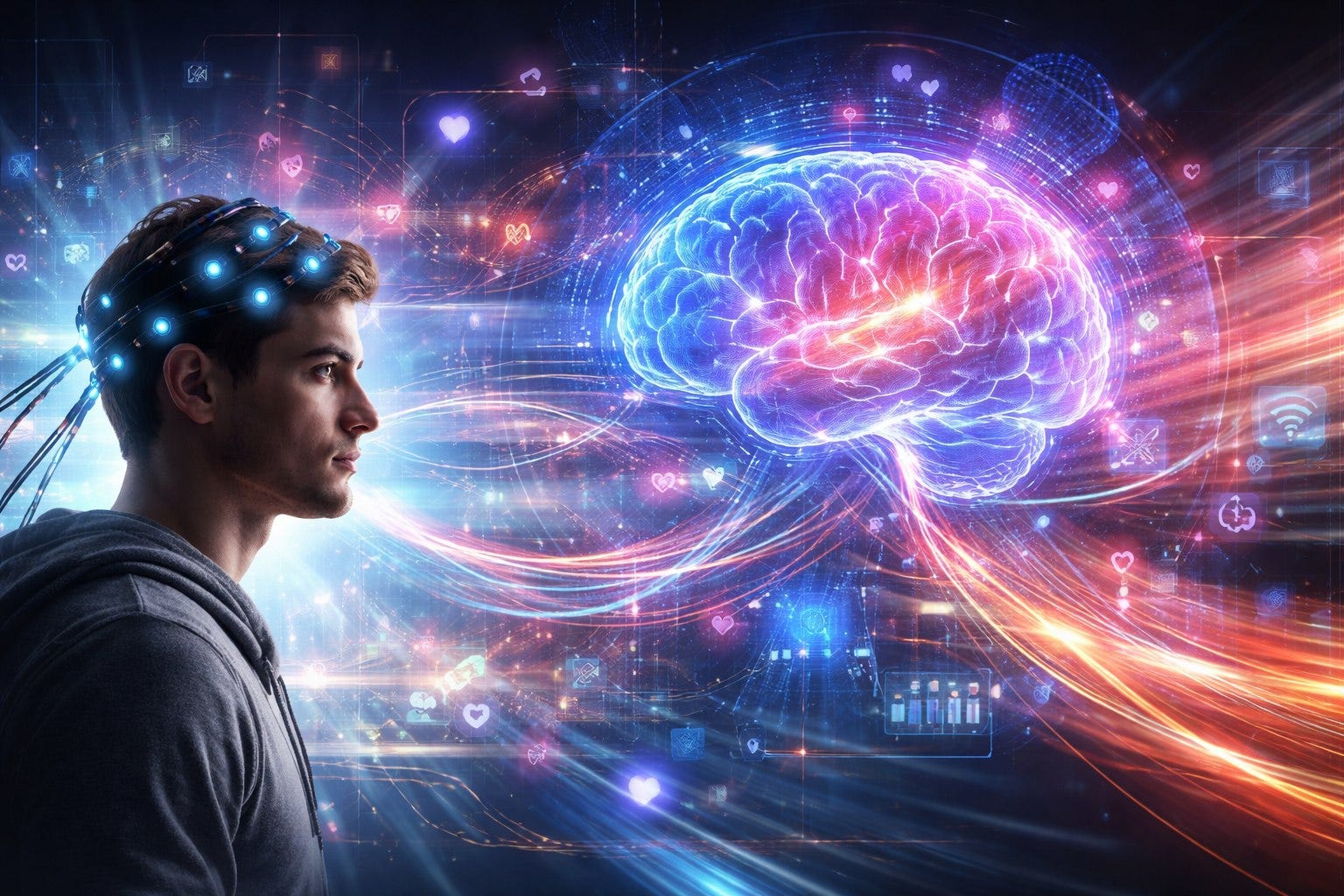
User experience (UX) design has long been the craft of pixels, typography, and intuitive workflows. But what if you could go deeper — all the way to the human brain itself? Welcome to the thrilling frontier of neurotechnology — where sensors, signals, and silicon meet cognition, emotion, and intention. This isn’t your typical UX talk about buttons and menus. This is about understanding and integrating the neural underpinnings of human experience to create digital interactions that feel, literally, natural — like the device is part of you. 📲🧠
Today, we’re exploring five transformative ways neurotech is pushing UX beyond the interface and into the realm of the human mind — making experiences smarter, more adaptive, and unmistakably human-centered.
🧠 1. Cognitive Personalization — Interfaces That Know (Almost) What You’re Thinking
Forget static dashboards. Neurotech — particularly brain-computer interfaces (BCIs) — can sense cognitive states like attention, stress, and mental workload, and adapt interfaces accordingly. Imagine:
a reading app that adjusts font size when it detects cognitive fatigue,
an e-commerce site that simplifies layout as stress increases, or
a productivity tool that proactively reduces clutter when your focus wanes.
This isn’t sci-fi — wearable EEG devices and platforms like OpenBCI are already pioneering accessible hardware that captures electrical brain activity to inform interfaces. These aren’t just gadgets; they’re cognitive sensors that help systems respond to you, not just your clicks. 🧠👀
Neuroadaptive systems are also becoming pivotal for inclusion. By recognizing different cognitive processing styles, digital experiences can be tailored for individuals with diverse neurological needs — making UX more equitable and human-centric.
🧪 2. Emotion Detection — The UX That Feels With You
We’ve engineered screens to be responsive. Now, we’re crafting experiences that are emotionally responsive.
Neurotech can detect emotional states through subtle signals — like changes in brain patterns, eye movement, or skin conductance — and adjust content or system behavior in real time. Think of:
music apps that shift playlists based on mood,
mental health tools that offer calming exercises when anxiety spikes, or
onboarding flows that slow down when frustration is detected.
The magic lies in recognizing that user experience isn’t just cognitive — it’s emotional. And by integrating that invisible layer into design, interactions become richer, more empathetic, and more engaging.
🎮 3. Direct Control Through Brain-Computer Interfaces — UX Without Touch
Sometimes the ultimate UX is not about better buttons — it’s about no buttons at all.
Brain-computer interfaces (BCIs) allow users to interact with digital systems through neural signals alone. Early work with BCIs — documented in research and real world trials — shows users with paralysis controlling cursors, devices, and even their physical environments purely with thought.
This leap transforms UX from interaction design to intent design. You’re not designing click paths; you’re designing systems that interpret intention directly from neural activity. As BCIs mature, we might see seamless command systems for everything from navigation to content creation — making tech accessible in ways traditional UX never could.
🔍 4. Enhanced Research — Discovering What Users Truly Think and Feel
Traditional UX research — surveys, interviews, usability tests — stops at observable behavior. It tells you what users did, not why they did it, or how it felt internally.
Enter cognitive neuroscience methods: tools like EEG, eye-tracking, and neurophysiological sensing reveal deeper insight into user psychology, emotion, and cognition. These techniques can:
uncover hidden stress points in flows,
reveal subconscious reactions to design elements, and
map true attention patterns across interfaces.
This level of analysis transcends click-through rates or heatmaps. It gives designers a neural map, showing what users don’t say but do process. It’s the difference between guessing and knowing — and it’s reshaping UX research into a science, not a guessing game.
♿ 5. Inclusive Experience Design — UX for Every Brain
Standard UX can unintentionally marginalize users whose cognitive styles don’t fit the “average profile.” Neuroinclusive design takes this head-on, emphasizing accessibility for neurodiverse users, sensory processing variations, and alternative cognitive paths.
Rather than a one-size-fits-none interface, neuroinclusive experiences:
offer customizable layouts,
allow adjustable sensory stimuli, and
reduce cognitive overload with adaptive feedback.
This isn’t just ethics — it’s smart product strategy. Inclusive neuro-aware design widens your audience and deepens engagement by respecting how real brains work.
🧭 A New UX Frontier, But With Real-World Checks
Let’s be clear: integrating neurotech into UX is potent — but it comes with heavy responsibilities.
The very technology that allows interfaces to understand users’ cognitive or emotional states also touches the mind. That raises legitimate concerns around privacy, consent, and ethical data use — as global bodies like UNESCO are now framing ethical standards for neural data protection.
So as designers and product leaders, the future isn’t just about what’s possible — it’s about what’s responsible.
Also read: 5 Big Bets On The Future Of Brain-Machine Interfaces
🧠 The Bottom Line: UX Beyond Clicks
Neurotechnology is quietly redefining what “user experience” means. We’re moving from:
✔ surfaces and screens
➡ toward minds and intentions.
This shift isn’t about gimmicks. It’s about building experiences that understand, adapt, and resonate with users at the level where experiences truly unfold — inside the brain.