

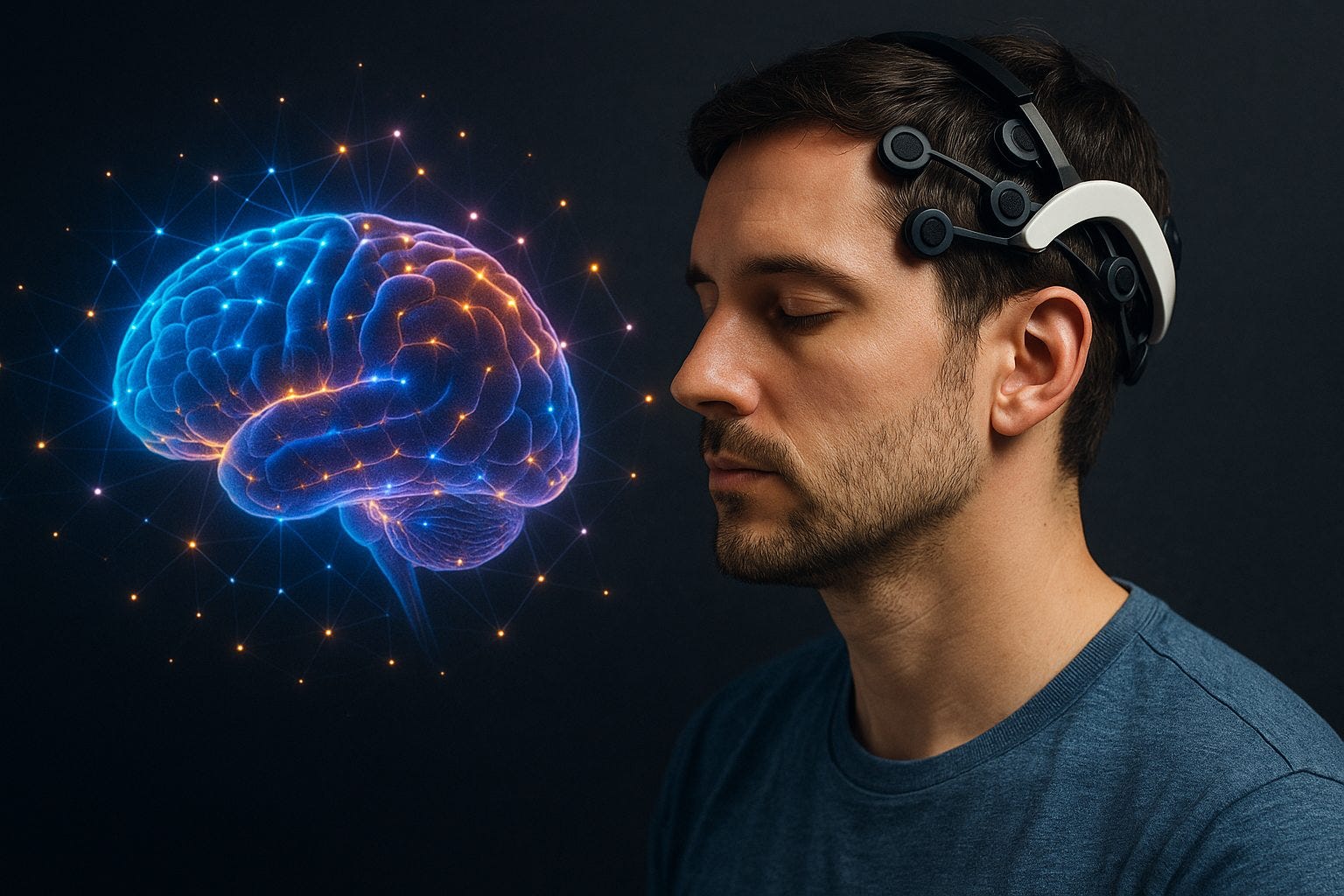
Imagine controlling your gadgets with thought alone — no taps, no swipes, no “Hey Siri.” It sounds like sci-fi, sure — but brain-computer interfaces (BCIs) are making that futuristic dream real today. A BCI captures brain activity and translates it into commands a computer or device can understand — whether it’s an EEG headset on your head or an implant deep inside your cortex. These technologies are moving fast, and a surprising number of them are already usable by non-scientists. 🧠⚡
Let’s unpack the coolest BCIs you can actually get your hands (well, brain?) on now — and why each one matters.
🔌 1. Emotiv EPOC X — Thought Control for Everyone
If you want to tinker with mind-control tech without a medical degree, think of Emotiv as a gateway drug to brain tech. Their EPOC X is a 14-channel wireless EEG headset built for both developers and curious humans alike. With around nine hours of battery life and saline-based sensors, it reads your brain’s electrical activity so you can control games, apps, drones — even art installations — with your thoughts.
It’s not invasive. No surgery. Just strap it on. Think cool wearable meets neural ninja. 🥷
Ideal for: developers, gamers, and curiosity-seekers.
Why it matters: It brings real BCI capability to consumers without medical risk.
🧠 2. OpenBCI Devices — DIY Brain Hacking, Unleashed
OpenBCI is the open-source spirit of the BCI world. Instead of a single product, it’s a platform — a suite of hardware like the Ganglion, Galea, and biosensing boards that let you experiment with brain signals, build custom applications, and plug into AR/VR projects.
Whether you’re a student, a maker, or a neurotech artist, OpenBCI is like LEGO for the mind.
Want to build an EEG-powered VR game? Or train a machine learning model to respond to your attention level? OpenBCI doesn’t ask why — it just gives you the bricks. 🧱🧠
Why it matters: It’s the most flexible consumer-accessible brain-computer interface toolkit today.
👓 3. Neurable — Mind Interaction Meets Everyday Workflow
Neurable positions itself as a BCI for productivity and life, not just research labs. Their technology translates your brain activity into input for computers and devices — so you might one day switch browser tabs or mute your Zoom call with a thought. That’s not promise — that’s marketing, but there’s real tech behind it. They’re actively selling devices now.
This is the world where “think it” becomes “do it.”
Modern. Minimal. Maybe a bit spooky. 👁️
Why it matters: Focus is shifting from niche medical markets to everyday user interactions.
🎧 4. Cognixion Axon — Communication for Every Mind
Cognixion isn’t just another headset company; it’s built around empathy and accessibility. Their non-invasive BCI tech — designed to unlock communication for people with severe speech disabilities — uses AI and brain signals to let users convey thoughts and control digital interfaces.
Also? They’re running clinical trials integrating their system with Apple Vision Pro, letting users combine BCI with cutting-edge AR. That’s futuristic and human-centered. 🧑🦽👩🦯
Why it matters: It shows BCI’s real impact — not just “cool gimmick,” but life-changing utility.
🧑🔬 5. X.on EEG Headset — High-Quality Signals for Serious Explorers
This sleek EEG offering stands out for quality and comfort. Made by veteran researchers in neurophysiology, X.on gives you easy access to rich brain signals for research, biofeedback, or experimentation with apps on Android and PC.
Think of it as the “pro-level” EEG headset for the thoughtful hobbyist, workshop leader, or neuroscience student — or just someone who wants data you can trust. 🧪
Why it matters: It bridges consumer ease with research-grade readings.
⚗️ 6. Intendix (aka Unicorn) — Classic EEG Meets Smart Control
Though classic in age, Intendix (now known as Unicorn) is still a solid BCI tool worth mentioning. It uses EEG to detect specific brainwave patterns like P300 or SSVEP signals — which developers can harness for spelling interfaces, smart home control, or assistive tech for people with motor disabilities.
Intendix isn’t flashy, but it works — and it’s one of the original consumer BCIs that inspired today’s crop of devices.
Why it matters: It proves that practical brain interface tech didn’t start yesterday — it’s been evolving.
🧠 What “BCI” Actually Means (Without the Hype)
Before you get too deep into mind-control fantasies, let’s anchor reality: a BCI is any system that captures brain activity and turns it into data a machine can use. That could be non-invasive EEG caps (like what most consumer devices use), or surgically implanted arrays used in medical settings.
The closer the device is to the brain’s neurons, the better the signal — but also the more intense the procedure. Consumer BCIs stick to non-invasive tech because it’s safer and accessible — and right now, that’s where most of us can play. 🎮
🧠 Why You Should Care (And Maybe Try One)
We’re at a weirdly thrilling crossroads where your thoughts can already interface with your devices outside of sci-fi labs. That has massive implications:
🌐 New control paradigms for computers and VR
♿ Accessibility tools that empower people with disabilities
🧘 Cognitive feedback for mental wellness
🎮 Novel gaming experiences
⚙️ Rapid prototyping for developers and researchers
Best of all? You don’t need brain surgery to start experimenting — just a headset and a curious mind. 😉