

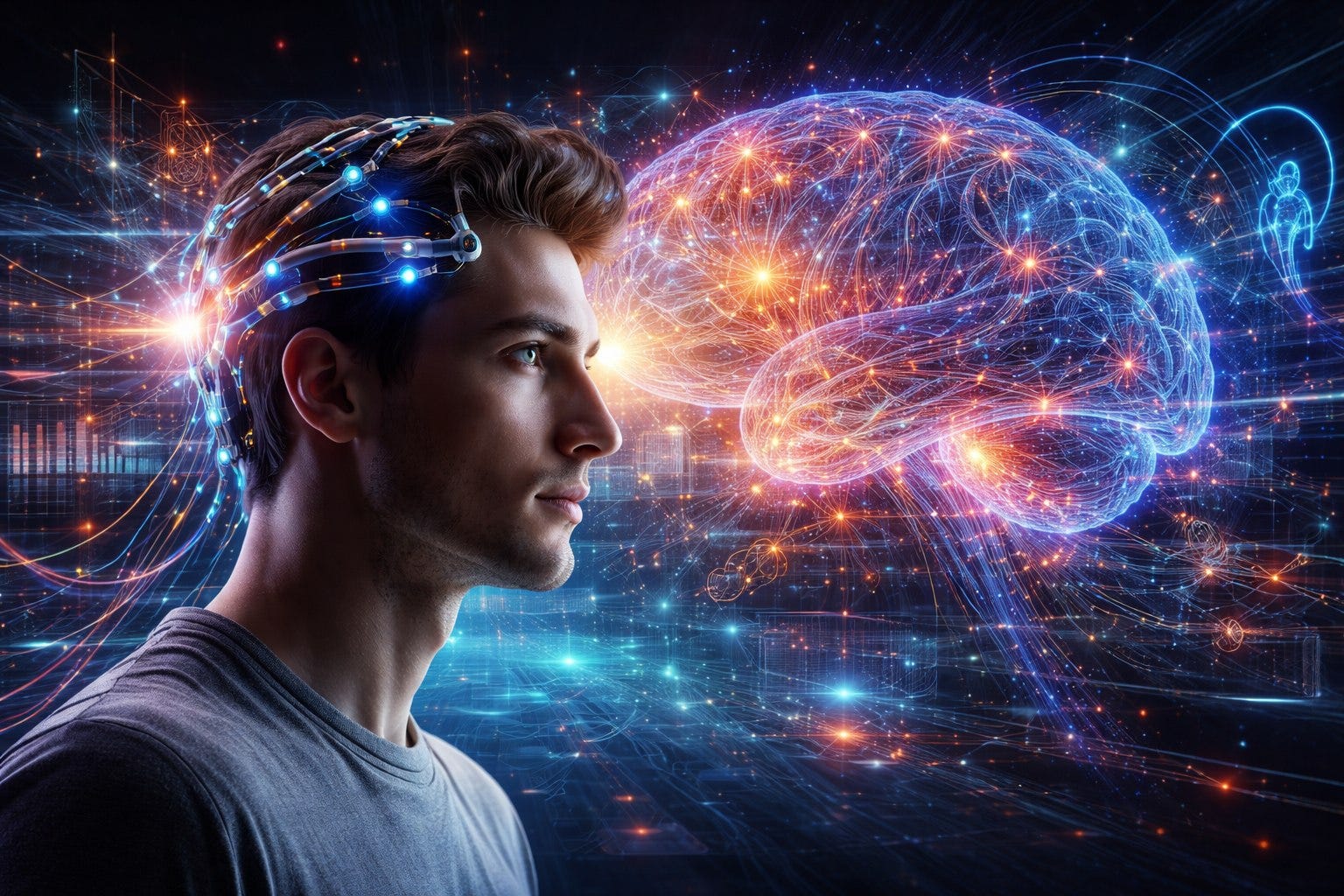
There’s a new tech category stirring the still waters of innovation — and it’s not another cloud tool or AI chatbot. It’s neurotechnology: the class of tech that taps directly into the most mysterious system in existence — the human brain. What once existed only in sci-fi novels and Elon Musk tweets is now shaping industries, creating new value streams, and solving tough business problems that legacy tech has long failed to address.
Neurotech isn’t just about futuristic implants or mind-reading headsets. It’s about reimagining how humans interact with machines — from healing injuries and accelerating learning to reinventing productivity and customer insights. Let’s break down the core business problems that neurotech is uniquely positioned to tackle today. 🧠🚀
1. Unlocking Productivity Plateaus 💼🧠
Most companies are obsessed with squeezing more output from the same workforce. But productivity isn’t a function of hours worked — it’s a function of attention and cognition.
Neurotech tools (like EEG headsets and focus-enhancing wearables) give businesses a real-time window into brain states — things like attention span, mental fatigue, and cognitive load — in ways that traditional productivity tools simply can’t measure. This lets teams tailor work environments, workflows, and schedules to how brains actually perform, not just how spreadsheets say they should.
Imagine knowing when your team is truly in “flow” — and when they’re just pretending. That’s the kind of competitive edge neurotech starts to unlock. 🧠📊✨
2. Solving Accessibility and Inclusion Challenges 🤝💡
Traditional tech often fails to serve people with physical or neurological challenges. Neurotech — especially brain-computer interfaces (BCIs) — is rewriting that story. These interfaces can decode brain signals and translate them into digital actions, allowing individuals with paralysis to communicate or control devices simply through thought. This isn’t just a medical breakthrough; it’s a business-critical canopy of inclusion.
Companies offering digital services and products must cater to all users. Neurotech enables experiences that were impossible just a few years ago, pushing accessibility from checkbox policy to lived reality. 🧠💬❤️
3. Reinventing Human-Computer Interaction 🤖🧠
We tap keyboards. We scroll screens. We shout at voice assistants. But these are all indirect ways of interacting with machines. Neurotech flips that on its head by enabling direct brain-to-machine communication.
BCIs can decode neural activity into actionable commands, creating interfaces that are faster, more intuitive, and in some contexts — life-changing. For businesses, this means radically new forms of engagement: hands-free control, thought-guided analytics, and interactions that have zero friction compared to traditional inputs.
Whether it’s controlling AR/VR environments or navigating complex dashboards without lifting a finger — mind-to-machine is the next frontier. 🚀🧠
4. Creating a New Data Frontier (Neural Data) 📈🧠
We’re swimming in data, yet the biggest insight gaps remain about why people think, feel, and choose the way they do. Neurotech introduces a deeply personal data category: neural data — the signals produced by the brain itself.
For businesses, neural data isn’t just another metric; it’s a potential new currency. Companies could use anonymized neural signals to optimize UX design, test emotional responses to products, and refine AI models with insights that go beyond clicks and scrolls. However, this power comes with huge ethical and privacy responsibilities. 🛡️ (Yes, the FTC is already watching this space closely.)
But imagine what you could learn if you understood not just what a customer did, but how their brain reacted while doing it. That’s transformative. 📊💡
5. Enhancing Mental Health and Well-Being 🧘♂️❤️
Mental health isn’t just a “nice-to-have” benefit — it’s a business performance issue. Burnout, stress, and cognitive overload cost companies billions annually. Neurotech devices can gauge stress, attention, and emotional states with a fidelity traditional surveys or wearable trackers can’t match.
This tech is already being piloted as closed-loop systems — devices that detect when a user is overwhelmed and prompt interventions in real time. For HR leaders and organizational designers, this means tailoring employee well-being programs with brain-informed insights rather than guesswork. 🧠💆♀️✨
6. Jump-Starting Innovation in Product Development 💡🔬
When your R&D relies on focus groups and self-reports, you’re building based on what people say they feel. Neurotech allows companies to test products and experiences by measuring raw neural responses — bypassing the filters of self-perception and bias.
This leads to sharper insights, faster iterations, and innovations that resonate at a subconscious level. Think prototypes informed by real brain reactions, not just opinions — that’s a shortcut to market differentiation that few competitors can touch. 🎯🚀
Also read: 7 Ways Startups Are Using Neurotech to Build Better Products
Are You Ready to Join the Neurotech Era? 🧠✨
Neurotech isn’t a fringe trend — it’s quickly evolving into a legitimate business toolkit. From unlocking deeper customer insights to reshaping accessibility, productivity, and human-machine interaction, the companies that embrace brain-centric tech early will ride the next wave of innovation.
💭 Questions to ponder:
What business processes in your organization might benefit from brain-level insights?
How far are you willing to go ethically to integrate neural data into your decision-making?
Are your privacy policies ready for brain data — the world’s most sensitive information?
The brain is the last technological frontier. And it’s open for business. 🧠🚀