

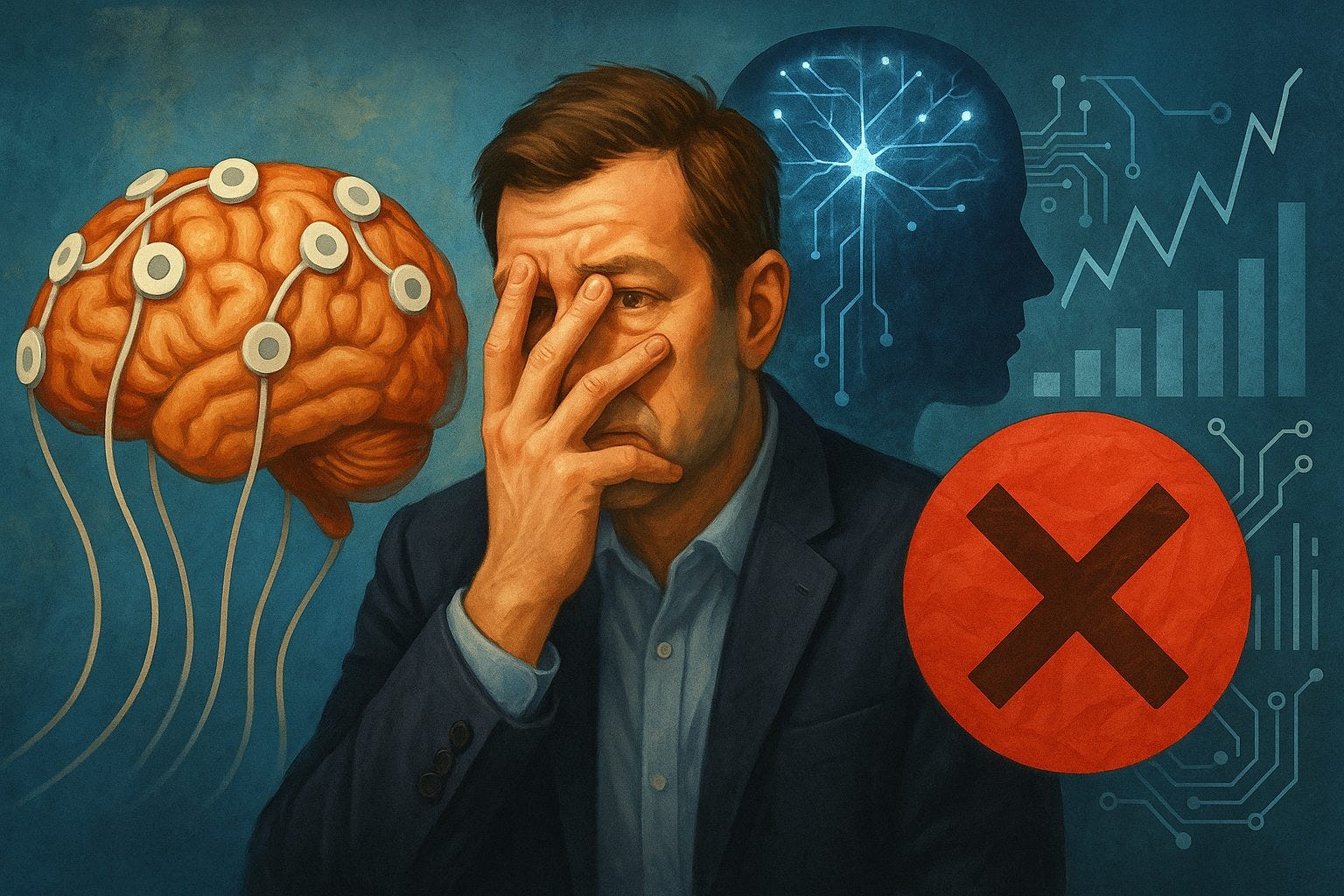
Neurotechnology is one of the most electrifying frontiers in innovation — a place where science fiction bleeds into real-world possibility. Imagine restoring movement to a paralysed limb, treating depression with precision brain stimulation, or helping someone control a device with pure thought. That’s the promise. That’s the allure. That’s also why investors claim to love the space. 🧠💡
Yet behind the hype lies a sobering reality: many neurotech startups fail to secure or sustain investor interest — not because the science isn’t cool, but because the business stumbles before the funding ever arrives. Ask almost any founder or VC, and they’ll tell you: novelty doesn’t pay the bills. In a field where regulatory hurdles are massive and timelines are long, the wrong move — even a small one — can tank your funding prospects before you’ve even built traction. Investors want capital efficiency, credibility, clarity, and a clear roadmap to scale. Miss that, and you’re toast. 🥲
In this article, I think you’ll discover not just the mistakes that doom neurotech startups but why they matter in the eyes of the people holding the checkbooks — and what you can do instead.
1. Ignoring the Regulatory Beast 🏛️📜
One of the biggest traps? Forgetting that neurotech, especially medically focused devices, lives in a world of deep, slow, and expensive regulation. Unlike mobile apps or consumer gadgets, many brain interfaces, implants, and clinical neurostimulation devices must navigate FDA classifications, IDEs, clinical trials, and pre-market approvals — a process that can span years and millions of dollars. turn1search7 Investors don’t fund wishful thinking about “disruptive cures”; they fund credible regulatory pathways.
Yet far too many founders gloss over this. They pitch dazzling demos while skirting timelines, clinical milestones, or compliance risk. Investors smell this instantly. Someone who looks like they underestimated FDA hurdles looks like someone who might mismanage runway — which is investor kryptonite. 🚫💰
If you want serious checks, early regulatory planning isn’t optional — it’s table stakes.
2. Overhyping Science, Under-selling Strategy 📊✨
Neurotech founders often have encyclopedic knowledge of neurons. But investors aren’t buying your thesis on neural plasticity — they’re buying confidence that you can build a business. Too many startups get stuck in the dazzling science while ignoring the market logic that investors demand:
What pain point are you solving?
How big is the addressable market?
Why now?
Who are your competitors and alternatives?
If you can’t answer these succinctly, you risk sounding like a lab report instead of a business leader.
And investors hate fuzzy projections. They want crisp metrics and realistic forecasts — not fantastical visions of “mind-reading computers ruling the world.” Ground the narrative. Realism builds credibility.
3. Wading into Funding Too Early or Too Broad 💸⏱️
Fundraising isn’t a sprint; it’s timing + preparation. Founders who chase VC checks before establishing product-market fit, early customer validation, or regulatory clarity often experience the same response: crickets. turn0search7 This isn’t because investors are mean — it’s because they are rationally optimizing for risk. Neurotech is capital-intensive and high-risk. If you haven’t de-risked the technical, clinical, and commercial aspects sufficiently, why should someone bet millions on you?
Even worse: asking everyone for money. Not all investors are equal, and not all capital fits every startup. Generalists who don’t understand neurotech’s timelines can ghost you. Specialist funds will ask tougher questions — but those are the interactions that signal credibility. Startups that scattershot pitch everyone often burn precious runway with very little to show.
4. Weak Team and Talent Mismatch 🧠🚪
Neurotech blends engineering, neuroscience, biotech, clinical strategy, and business execution. Too often founders come from purely academic or purely technical backgrounds with little commercial DNA. Investors dig teams that complement science with strategy and go-to-market savvy. turn0search4
If your CTO is a brilliant neuroengineer but can’t articulate a unit economics model, that’s a problem. If your lead scientist doesn’t know why IP strategy matters to investors, that’s a problem. A neurotech company needs a well-rounded team before investors are willing to write serious checks.
5. Neglecting Intellectual Property and Data Ethics 🧬🔏
In an industry built on innovation, IP is your moat. Investors want to see strong patents, defensible IP positions, and a strategy to protect your technology. Startups that delay filing patents or keep IP ownership messy invite investor anxiety and legal scrutiny. turn0search4
Bonus landmine: data ethics. In neurotech, neural data — your core intellectual asset — is highly sensitive. U.S. regulators and even federal lawmakers are scrutinizing how this data is collected, used, and shared (especially outside regulated medical devices). turn1news23 Investors don’t just want ethical practices; they want clear, compliant, and scalable frameworks for handling this goldmine of data. Lax policies here can kill deals fast.
6. Overhyping Today and Undervaluing Tomorrow 🌐🤯
Let’s face it: neural interfaces are sexy. But hype without substance makes experienced investors nervous. Claims about telepathy or human-AI merging might get media clicks — but they raise red flags for due diligence teams who are trained to separate vision from vaporware. turn1news21
Investors want demonstrable milestones, repeatable data, measurable traction, and realistic timeframes. They don’t want poetic dreams about decoding thought (yet). If your narrative leans too sci-fi and not enough go-to-market logic, investors will love the buzz but not the term sheet.
Also read: 7 Business Models That Actually Work In NeuroTech
Final Thought — And Your Next Step 💡
Neurotech is a breathtaking frontier. As markets expand — projected to grow into tens of billions globally over the next decade — there is capital available. turn1search4 But investor interest is tethered to clarity, discipline, credibility, and a grounded path toward real adoption.
Ask yourself:
👉 Can I articulate why now is the moment?
👉 Do I have regulatory milestones mapped?
👉 Is my pitch business-first, not just science-first?
👉 Does my team cover the gaps investors care about?
If you can answer those, you’re not just another neurotech hopeful — you’re a potential investment story. ✨