

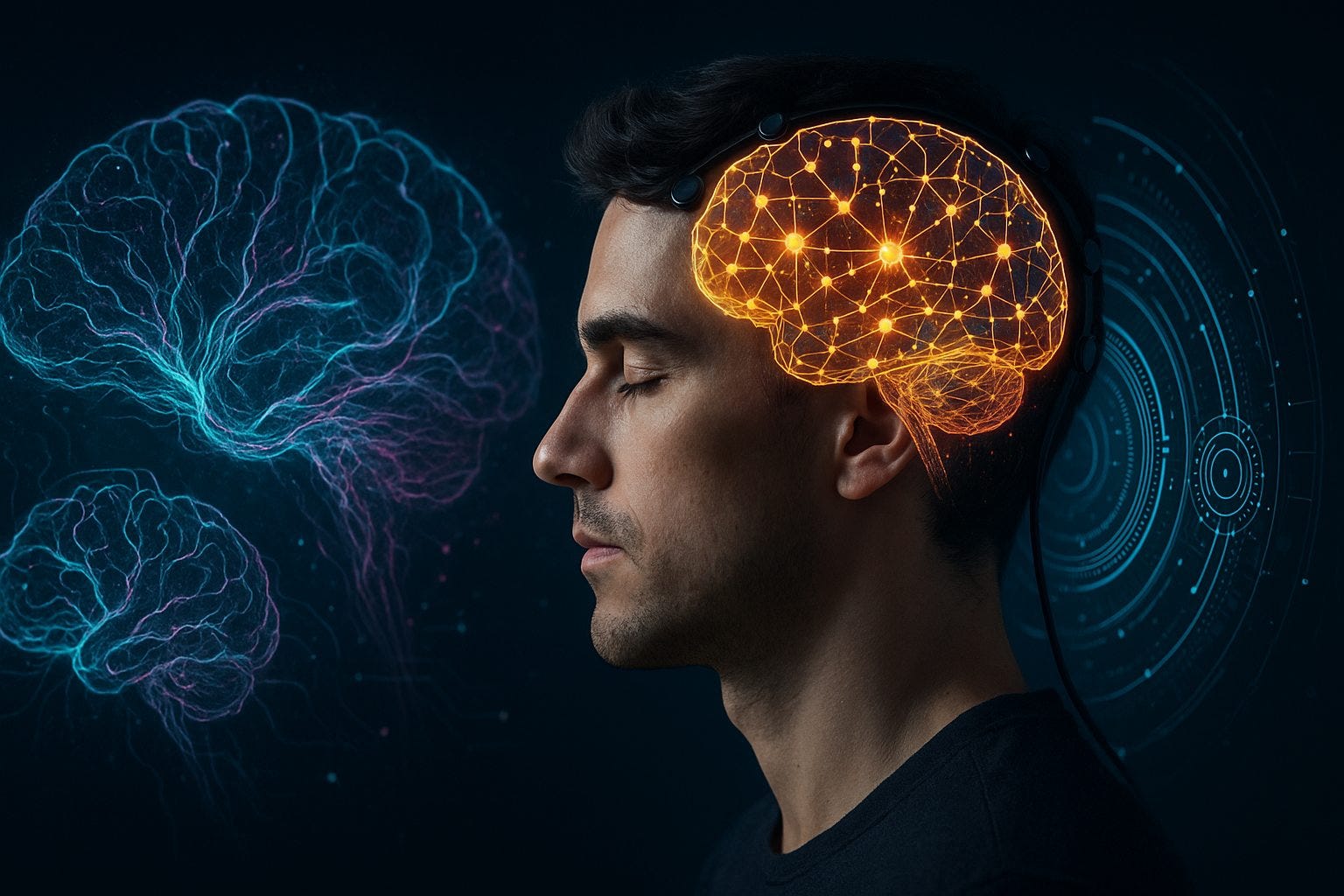
Imagine controlling a computer, a wheelchair, a speech interface — with just your thoughts. Or receiving gentle electrical pulses quietly at the back of your skull to quiet down seizures or ease depression. What once felt like science fiction is shaping up to be tomorrow’s normal — because neurotechnology is entering a phase of breakneck growth.
In this article, I dive into six specific neurotech markets that, I believe, are set to explode over the next five years. I map out what’s fueling the surge, why investors (and regulators) are paying attention — and where you might want to watch carefully. ⚡
🧠 1. Brain-Computer Interfaces (BCIs) — The “Mind-Control” Market
It’s impossible to talk about neurotech without starting here. The market for brain-computer interfaces — devices that interpret neural signals and translate them into actions — is exploding. Some forecasts see global BCI revenue growing from roughly USD 2.4 billion in 2025 to over USD 12 billion by 2035.
Yet, others are even more bullish: one report predicts a jump from USD 3.445 billion in 2025 to a staggering USD 19.99 billion by 2035 — a roughly 6× increase.
Why such divergence? Because BCI isn’t a monolith. You have:
Non-invasive BCIs, usually based on EEG or other external sensors — easier to deploy, lower risk, creeping into wellness, gaming, and everyday assistive tech.
Invasive (or implantable) BCIs, often used for clinical scenarios: paralysis, prosthetic control, speech restoration etc.
As neural signal-processing, AI, and hardware steadily improve, both segments grow — meaning BCI is not just niche, but becoming foundational.
In the next five years, I expect BCIs to expand beyond clinical “help for the disabled” into mainstream: gaming, augmented reality, accessibility, and even simple “mind-control your smart home” scenarios.
🏥 2. Neurostimulation & Neurotherapeutics Devices
BCIs catch the headlines — but the broader segment of neurotech devices (stimulators, therapeutic implants, monitoring tools) is surging even faster. One recent projection estimates the global neurotech-devices market to leap from USD 16.66 billion in 2025 to nearly USD 55.8 billion by 2034.
This includes:
Deep-brain stimulators for Parkinson’s disease
Implants for epilepsy control
Non-invasive or implantable devices for depression, OCD, chronic pain
Wearable or clinic-based EEG/fMRI systems for diagnosis and monitoring
Demand is driven by demographics (aging populations mean more neurodegenerative diseases), rising awareness of mental-health conditions, and a growing push for minimally invasive — or non-invasive — solutions.
If I were a medical device company, I’d be pouring R&D dollars into neurostimulation now. Investors are. Patients are. And regulatory pathways are gradually clearing.
🧬 3. Implantable BCIs & Neuroprosthetics — “Real Brains, Real Devices”
Not all BCIs are created equal. The implantable, invasive (or minimally invasive) kind — where electrodes sit directly on or in the brain — are arguably the most dramatic. According to one forecast, the implantable BCI market itself is set to grow from USD 351.3 million in 2025 to USD 1.18 billion by 2035.
Why the niche but steady growth? Because these devices are pushing into serious medical territory: paralysis recovery, brain-injury rehab, communication restoration for “locked-in” patients, perhaps even cognitive enhancement in the far future.
Technical innovations — better materials, electrode arrays, AI-powered decoding, wireless communication — are making implants safer, more efficient, and more clinically viable.
In short: if non-invasive devices are the “smartwatch” of neurotech, implantable BCIs are the “smart-prosthetic limb.” And over the next five years? I expect steady but strong clinical adoption, especially as regulatory frameworks mature.
💡 4. Brain Imaging & Neurodiagnostic Tools
For neurotech to succeed, it’s not enough to just stimulate or interface — you need to see what’s going on under the skull. That’s where neuroimaging and diagnostic tools come in (EEG, MEG, fMRI, and emerging signal-processing systems).
One forecast suggests that by 2034, neuroimaging and related diagnostics will represent a large share of the broader neurotech market — which overall could hit USD 52–53 billion globally.
Why is this important? Because:
Diagnosis is the first step for treatment — for epilepsy, dementia, mental illness.
As neurotech proliferates, monitoring becomes essential (safety, efficacy, personalization).
Companies are working to make imaging cheaper, portable, and AI-driven — meaning we could see “home EEG kits” or “clinic AI-guided brain scans” become common.
From my vantage point, this is the unsung backbone of neurotech’s growth. Without strong imaging and diagnostics, BCIs and stimulators would be shooting in the dark.
🤖 5. AI + Neurotech Integration — The “Smart Brain” Software Wave
Hardware gets all the glory — electrodes, implants, sensors — but the real magic lies in how we interpret, process, and act on neural data. That’s where AI and machine learning hit hard.
Recent reports point to a rising wave of investment where AI-powered signal decoding, neural-data processing, adaptive neurostimulation, and closed-loop systems become central.
This segment is likely to balloon because once you have reliable neural data (EEG, ECoG, fMRI), the next step is “what can we do with it?” And that opens up fields like:
Personalized neuro-therapy (stim parameters adjusted in real time)
Adaptive prosthetics and exoskeletons
Cognitive enhancement or brain-performance monitoring
Brain-driven UI / UX for AR/VR, or home automation
In other words — the brain + AI = brain-smart devices. And “smart” sells.
🌍 6. Consumer & Wearable Neurotech — Brain Health, Wellness & Lifestyle
Finally — the dark horse. Most neurotech coverage still focuses on medical, clinical, or research use. But there’s a fast-emerging consumer side: wearable EEG headsets, neurofeedback devices for meditation or focus, “brain wellness” gadgets, even early VR/AR integration.
Why is this an under-the-radar growth area? Because it lowers the barrier: non-invasive, relatively affordable, and attractive to a broader audience. One recent estimate of the overall neurotechnology market (including devices, software, imaging, etc.) sees it climbing to as much as USD 52.86 billion by 2034.
As public interest in mental health, biohacking, cognitive fitness, and longevity grows — so does demand for “brain-wellness” tools. Think of wearables as “smartwatches for your brain.”
Yes: there are ethical, data-privacy, and regulatory questions. But if you’re looking for growth potential — this might be the sleeper hit of neurotech’s next wave.
⚠️ Challenges, But Also Astonishing Opportunity
I don’t want to paint a Pollyanna portrait. Neurotech faces real hurdles:
Regulatory and ethical complexity (especially for implants or data-heavy tools).
Privacy and “neural data” governance — who controls, owns, protects brain data.
Adoption friction: clinical conservatism, cost, risk, trust.
Technical trade-offs: invasiveness vs. signal quality; portability vs. monitoring depth.
Yet, limitations often spell opportunity. As technology matures, costs come down, standards emerge — what once was high-risk / high-barrier becomes accessible.
I think the next half-decade will see that shift: neurotech going from niche to mainstream, from lab benches to living rooms, from clinical trials to everyday tools.
✅ My Take: Where to Watch, What to Do
If I were investing, building a product, or just trying to stay ahead of the curve — I’d keep an eye on the following:
Non-invasive BCIs & wearables — fastest adoption potential, especially for accessibility, wellness, and consumer use.
Neurostimulation & implantable BCIs — for therapeutic power and serious clinical impact.
AI-powered neurodata platforms — bridging signals to actionable insights, control systems, or brain-driven UIs.
Brain imaging & diagnostics — the foundation enabling everything else.
Consumer neuro-wellness tools — the sleeper market that could reshape how people think about cognitive health.
If you care about where neurotech is going — or want to join the ride — now’s a great time. This field is shifting fast.