

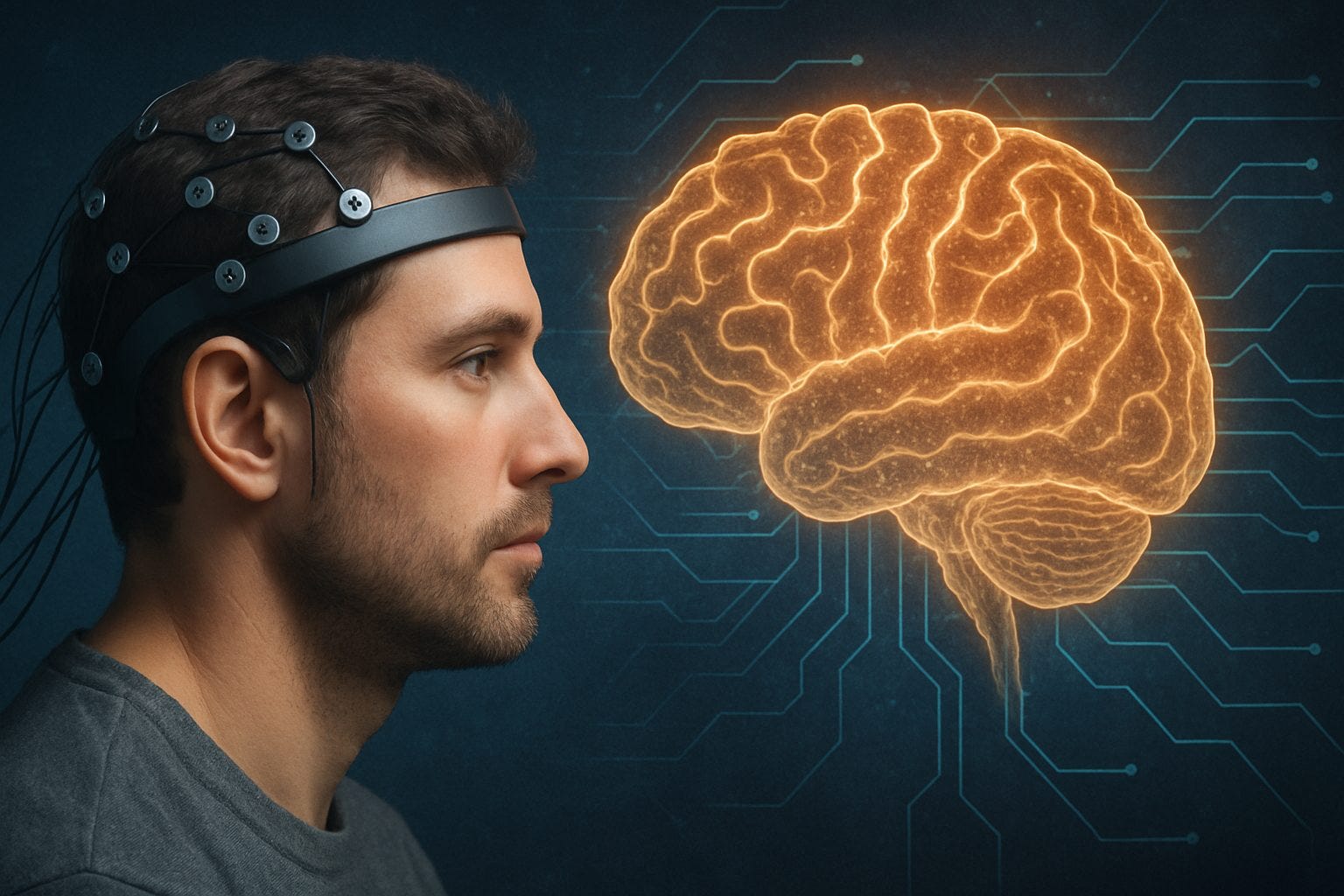
Brain-tech — sounds like science fiction, right? A little too often, it is. Between flashy headlines, promises of mind reading, and glossy startup pitches, the hype around things like brain-computer interfaces (BCIs) balloons fast. But here’s the thing: the real world of brain-tech is a messy, fascinating, imperfect dance between neurons, wires, ethics boards — and human hopes. In this piece, I peel back seven of the most persistent myths about brain-tech, offering a reality check that’s rooted in what scientists actually know today. Buckle up. 🧠
Myth 1: “We only use 10% of our brain — imagine what brain-tech could unlock!”
You may have heard that humans only use 10% of their brains. It’s a seductive idea, conjuring images of vast untapped potential, neuro-superpowers waiting to be activated. But real science argues otherwise. Functional brain imaging shows that even during simple everyday tasks, virtually all regions of the brain are active at some point. Damage to even “small” areas often causes serious impairments — which wouldn’t make sense if that 90% were inert.
In short: your brain is already firing on nearly all cylinders. The “10% myth” is more pop-psychology than biology. So no, there isn’t some deep mental reserve just waiting for the right implant or gadget.
Myth 2: BCIs can read your thoughts — your private monologue is out there for grabs
One of the most sensational myths: that brain-computer interfaces can eavesdrop on your innermost thoughts, dreams, or secret desires. Spoiler: that isn’t true. Current BCIs don’t decode arbitrary thoughts or memories. What they do is track very specific, controlled brain signals tied to pre-determined tasks or mental states.
It’s like mistaking a TV remote for mind control: you can press a button (i.e., think a specific thought or perform a mental task), and maybe a robotic arm moves — but that doesn’t mean the device understands your entire mental life. So no: brain-tech does not give Big Tech a VIP pass into your subconscious.
Myth 3: BCIs are mature, reliable, everyday-ready gadgets
If you read enough tech blogs or scan startup press releases, you might believe that BCIs are already as common as wireless earbuds. In reality, the field remains in its infancy. According to experts, most BCI work is still in labs or clinical trials — not in schools, offices, or homes.
Yes — progress is real. But hurdles abound: decoding brain signals accurately, creating ergonomic and safe implants, ensuring long-term stability. Until those are solved (and that might take years, maybe decades), BCIs are not yet “consumer ready.”
Myth 4: Brain-tech can magically “fix” your brain — treat depression, insomnia, or make you smarter
There’s a tendency to believe that if brain-tech can tap into the brain, it must be able to correct any mental ailment or boost your intelligence. Reality check: while neurotechnology offers promise, it’s not a magic wand.
Take implantable BCIs, for instance. They carry real risks: tissue damage, rejection, malfunction, or unpredictable long-term effects. And even non-invasive methods like EEG-based interfaces are limited in scope and reliability.
So yes — brain-tech may help people with specific neurological conditions someday. But if you expect a brain implant to turn you into a genius or “fix” all psychological problems, you’re buying science-fiction, not science.
Myth 5: BCIs are private and safe — no risks to your brain or data
Picture this: you strap on a BCI headset, and your brain signals are secure. Sounds fine, right? Not quite. First, there are real biological risks — especially with implants. Long-term use may provoke tissue response or scar formation, reducing efficacy or causing harm.
Second — privacy. Brain signals are data. And as one recent review warns, BCI systems often neglect privacy-preserving practices. Raw neural data sent over networks is potentially vulnerable. Before we trust BCIs with life-changing tasks, we need robust safeguards — legal, technical, ethical.
Myth 6: “Mind-uploading,” instant knowledge download, or memory transfer is just around the corner
This one lives in movies and sci-fi thrillers more than labs. Despite dramatic claims by some brain-tech evangelists, there’s no credible scientific basis for “uploading” or “downloading” memories, skills, or experiences to/from a brain via any current neurotechnology.
Your memories, your skills — they’re woven into the complex, deeply personal wiring of your brain. You can’t just duplicate or transfer them like files. And until neuroscience can map that wiring in granular, dynamic detail — a feat far beyond today’s capabilities — that sci-fi dream remains, well… fiction.
Myth 7: Because brain-tech is “cutting-edge,” it’s always better than old-fashioned therapy or rehabilitation
Tech fetish is real. But newer doesn’t always mean better. For some conditions, conventional therapies remain safer, more proven, and effective. In many cases, brain-tech is still experimental and unproven.
Even for applications where BCIs seem promising (like helping people with paralysis communicate or control devices), researchers stress that rigorous testing, ethical oversight, and long-term studies are essential.
So before we cheer for brain-tech as the next panacea, we need humility — and patience. Good science, not hype.
Why does this matter?
Because brain-tech is more than gadgets. It treads into our minds, our autonomy, our identities. The gap between hype and reality isn’t just technical — it’s moral, ethical, societal. Overhyping BCIs risks misleading people with medical conditions, encouraging risky choices, or fueling unrealistic expectations.
What we should do instead
Approach brain-tech with curiosity and skepticism.
Demand transparent, evidence-based research before embracing claims.
Push for robust privacy protections and ethical oversight.
Celebrate real progress (yes — BCIs are doing compelling work in labs and clinics) without losing our grip on what is possible today… and what is still sci-fi.
Bottom line: Brain-tech is exciting. Powerful, even. But treat it like early-stage science — not magic.