

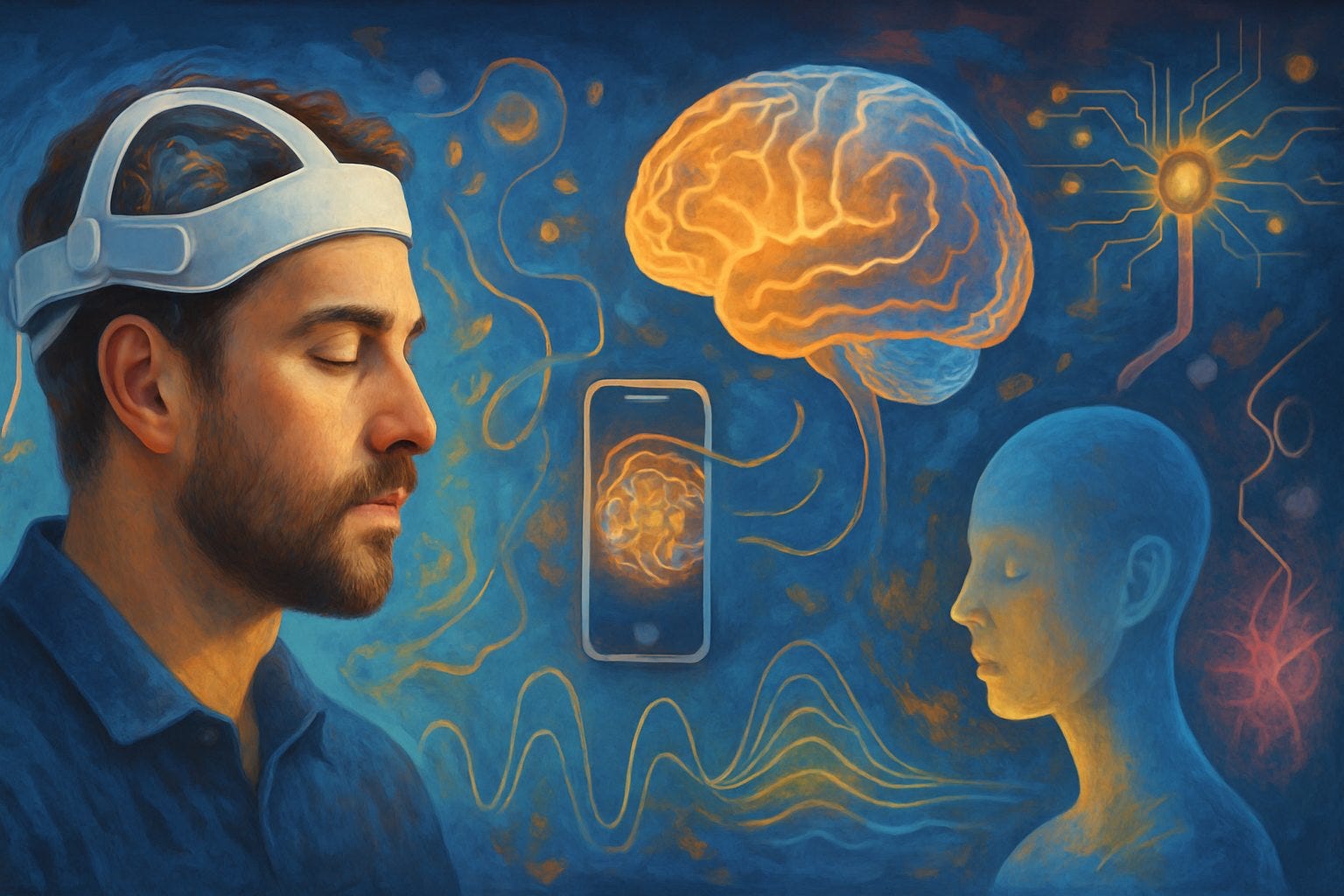
Imagine if your mind could be gently tuned like a finely crafted piano — where mood dips aren’t met with pills alone, but targeted stimulation that speaks the language of your neurons. 🧠 Welcome to the era of neurotechnology in mental health, a frontier that’s no longer science fiction but real-world treatment for depression, ADHD, and anxiety. From FDA-cleared brain stimulators you can use at home to wearable devices that whisper calm into your nervous system, neurotech is rewriting the playbook on emotional well-being.
This is not hype. These tools are gaining regulatory approvals, entering clinics, and showing real effectiveness in clinical settings. They are not “magic,” but they might be faster, kinder, and more tailored than traditional treatments. 🚀
So how exactly is neurotech changing mental health care? Let’s dive into the seven most exciting developments. 👇
1. At-Home Brain Stimulation: A New Prescription for Depression
For decades, brain stimulation was something you only heard about in textbooks — an intimidating, clinical procedure behind locked doors. That’s changing.
In late 2025, the FDA approved Flow Neuroscience’s FL-100, the first at-home brain stimulation device for moderate to severe depression. This wearable headset sends a gentle electrical current to key mood-regulating areas of the brain — right in your living room 💡 — and users see improvement in weeks rather than months.
Here’s what makes it special:
Home use under doctor supervision — no hospital trips.
Non-invasive, mild stimulation.
Real trial data showing symptom remission for many users.
Think of it like a mood dial you can adjust — except it’s science, not voodoo. ⚡
👉 CTA: If traditional antidepressants haven’t worked for you, ask your clinician about neurostimulation options.
2. Digital Therapeutics: Smart Apps That Are Actually Medicine 📱
Not all neurotech lives in hardware. Some of it lives in your pocket.
One FDA-approved digital therapeutic app, Rejoyn, uses smartphone-based cognitive exercises rooted in CBT to help treat major depressive disorder when prescribed by a clinician.
Why this matters:
It transforms your phone into a treatment tool.
It supports traditional therapies rather than replacing them.
It’s evidence-based — not just “wellness fluff.”
Apps like these are lowering barriers to help for people who might never step into a therapist’s office.
3. Neurofeedback: Playful Biofeedback for Your Brain 🌈
Ever heard of using a video game to calm anxiety or fight depression? That’s neurofeedback — a method that lets your brain see itself in action and learn how to self-regulate.
Clinical evidence suggests that EEG-based neurofeedback can reduce depressive symptoms and improve attention in ADHD, though results can vary and the science continues to evolve.
Here’s the gist:
You wear sensors that track your brain activity.
Software translates signals into visual or game-like feedback.
Your brain “learns” to calm itself over time.
It’s like meditation with a scoreboard — and it feels like learning to surf the waves inside your own head. 🏄♂️
4. Trigeminal Nerve Stimulation: Zap Your Way to Better Focus 🔌
Attention-Deficit/Hyperactivity Disorder (ADHD) might finally get more than pills and talk therapy.
Trigeminal nerve stimulation (TNS) — a gentle electrical treatment delivered through skin-worn electrodes — is FDA-approved for treating ADHD in children and increasingly studied for other uses.
Why this is intriguing:
It’s non-medication focused.
It directly targets neural pathways associated with attention and impulse control.
It carries minimal systemic side effects compared to stimulants.
Kids and adults alike may benefit from this emerging modality — though long-term studies are still unfolding. ⏳
5. Deep Brain Stimulation: Pacemaker-Style Relief for Severe Cases ⚡
For people battling treatment-resistant depression or crippling anxiety, invasive options like deep brain stimulation (DBS) are getting attention.
Recent clinical work shows that DBS — which implants electrodes deep in mood-related brain regions — can significantly improve symptoms in many patients.
Here’s the kicker:
This is not a first-line treatment — it’s for those who’ve tried everything else.
It’s precise, powerful, and monitored by specialists.
It feels eerily like a pacemaker for your emotions.
High-risk? Yes. High-reward for some? Absolutely. 💡
6. Wearables & Vagus Nerve Tech: Calm at the Speed of Light 🌬️
Not every breakthrough needs surgery or prescription pads.
Wearable devices — like vagus nerve stimulators — are showing promise for anxiety relief and stress management by modulating the nervous system’s “brake pedal.”
Why it’s cool:
Tiny gadgets can reduce stress signals instantly.
They blend into daily life — stress down, freedom up.
You don’t need a clinic appointment to benefit.
It’s like having a mini mental-health assistant perched on your neck.
7. AI & Personalized Brain Care: The Future Is Adaptive 🧠🤖
Behind all these tools, there’s an even bigger shift: AI-powered personalization.
Machine learning isn’t just analyzing your Spotify playlist — it’s beginning to analyze your mental state to tailor how neurotech responds to you. AI models can interpret patterns in behavior, imaging, or neural data to predict the best course of treatment for individuals.
Imagine:
Dynamic treatment plans that evolve with you.
Early detection of mood shifts before they flare.
Personalized “digital twins” of your mind optimizing therapy in real time.
This isn’t tomorrow’s tech — it’s happening now.
Also read: 8 NeuroTech Tools That Can Improve Focus & Mental Clarity
Final Thoughts: Where Tech Meets Care
Neurotechnology isn’t a silver bullet. It doesn’t eliminate the complexity of human emotion or the messiness of life. But it does offer new paths when old ones fail, helping clinicians and individuals rethink what treatment can look like — personalized, precise, and sometimes even playful. 💫