

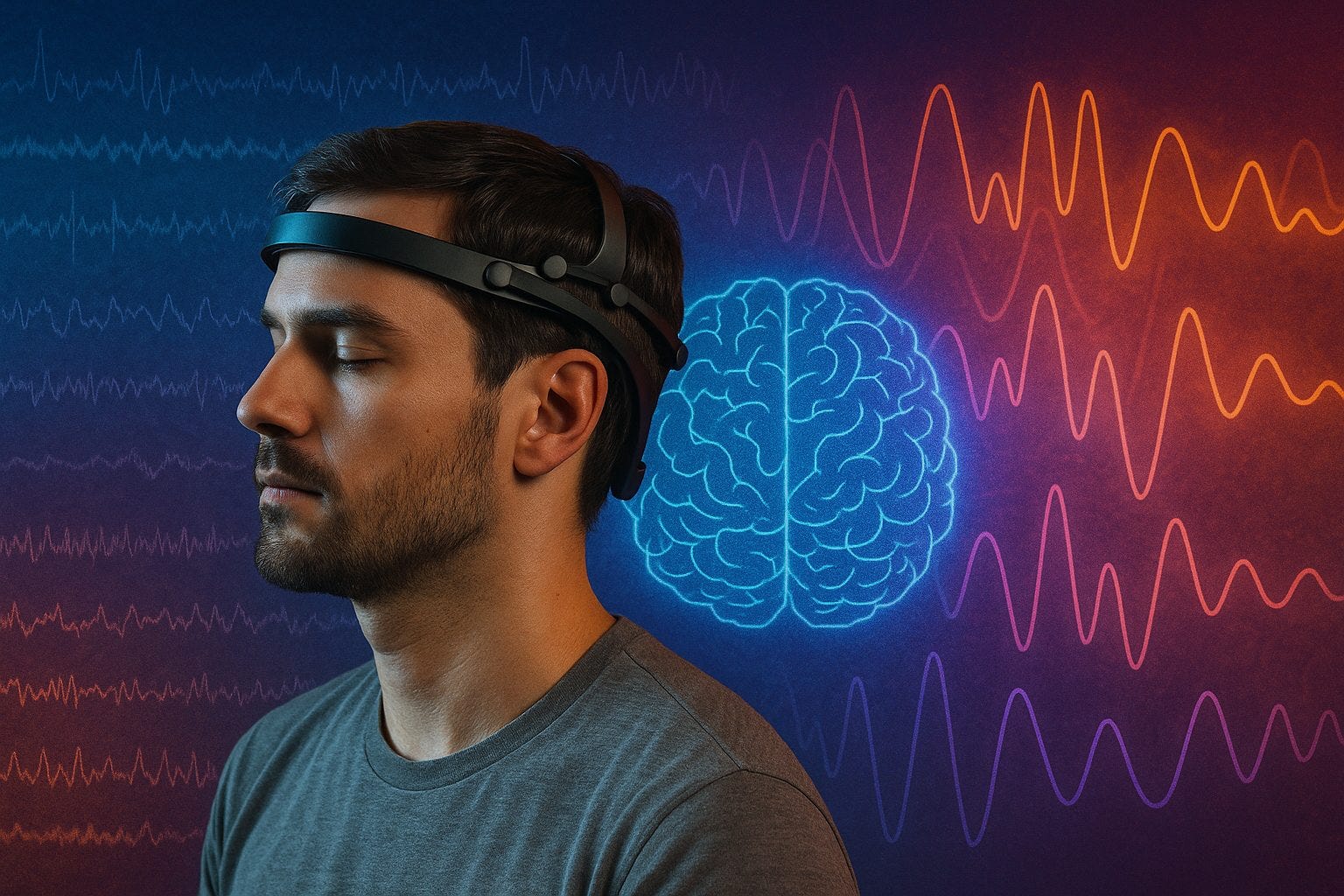
In a world where multitasking is the norm and distractions lurk at every browser tab, finding mental clarity feels like searching for a clean window in a foggy morning. What if you could slip on a headband — just like strapping on headphones for music — and instead channel your brain into sharper focus, deeper calm, better sleep or cognitive clarity? Welcome to the new frontier of neurotechnology: a quietly booming market of consumer tools aiming to help you train your brain the same way you train your body. 🧠✨
Below, I walk you through eight of the most interesting and promising neurotech tools today. Some are sleek headbands that read your brainwaves, others gently stimulate your brain to up your concentration or improve clarity. All of them promise not magic, but subtle — and possibly transformative — enhancements to how you think, focus, and perform.
Why NeuroTech — and Why Now?
Neurotechnology has moved far beyond the labs. According to recent analysis, the consumer neurotech market is surging, fueled by advances in wearable sensors, software, and an appetite for cognitive optimization — from productivity buffs to biohackers to everyday professionals.
These tools generally rely on non-invasive approaches — think EEG (electroencephalography), functional near-infrared spectroscopy (fNIRS), or gentle brain stimulation — to monitor or modulate brain activity.
The idea isn’t to “hack” your brain like in a sci-fi movie. It’s more like giving it a nudge — through feedback, stimulation or guided training — and letting its natural plasticity (ability to change) do the rest. As proponents say: train your brain like a muscle.
The Tools Worth Watching (and Trying)
Muse / Muse S Athena
If there’s a “poster child” for consumer neurotech, it’s Muse. The original Muse headband — using 4-channel EEG — already gained fame for helping users meditate, relax and track brain activity in real-time.
But the new Muse S Athena takes it to another level. It combines EEG with fNIRS (measuring blood oxygenation in your frontal cortex), giving a richer, more nuanced picture of how your brain functions.
What that means in practice: you get real-time feedback on whether your brain is calm, focused, stressed — and you can train toward desired states using guided meditations, focus sessions, or even brain training games (yes: you control an owl’s flight with your mind).
Best for: Anyone curious about mental fitness, especially those serious about improving focus, reducing stress, or building long-term cognitive resilience.
Neurosity Crown
If Muse feels like a wellness gadget, Neurosity Crown leans more “techie power user.” It offers an 8-channel EEG — among the highest-resolution consumer wearables — and focuses heavily on productivity, “flow” states, and real-time brain data.
You don’t get meditations or calming sounds. Instead, you get raw data (and a developer-friendly API), meaning you — or someone building on top of it — can create custom dashboards, apps, or productivity setups tailored to your brain’s rhythms.
Best for: Developers, cognitive hackers, and people who like diving deep into data to optimize their work or creative flow.
Emotiv (e.g. Emotiv Insight)
If the Neurosity Crown is “pro-grade,” Emotiv occupies the “versatile everyday user” zone. Their EEG headsets — like Insight — are designed for everyday use, combining wireless sensors with motion tracking and emotion-awareness tools.
They don’t promise wizardry, but they do offer feedback loops that can help you become more aware of your mental states — which is often the first step toward improving them. Could be handy for people juggling high-stress work, creative projects, or just wanting a sense of “when am I most focused?”
Neuroba-style Wearables
Emerging startups and boutique neurotech firms — like Neuroba — highlight wearables that both monitor brainwaves and deliver real-time neurofeedback or gentle stimulation. The goal: nudge your brain toward beta-wave dominance (associated with focus and alertness), suppress distracting patterns, and train clearer thinking and memory.
These tools lean heavily on the principle of neuroplasticity — your brain’s ability to rewire itself. Over time, with consistent use, you might strengthen neural pathways linked to attention, learning, or calm.
Best for: People keen on long-term mental fitness, brain training, or biohacking without going into heavy equipment or medical-grade interventions.
AI-Guided Brain Stimulation Systems
Here’s where things get futuristic — yet surprisingly accessible. A recent 2025 study from researchers at University of Surrey and University of Oxford describes a home-based system using non-invasive brain stimulation (specifically tRNS — transcranial random noise stimulation) combined with AI to personalize stimulation settings for each user.
In trials, participants who used the AI-adapted stimulation showed significantly improved concentration compared with placebo or standard stimulation.
If that tech makes its way into consumer headsets soon — and used responsibly — it could offer a compelling way to boost focus, especially for people whose work demands long periods of concentration.
EEG + Neurofeedback Headbands & Calm-Focus Devices
More “everyday wellness” than hardcore biohacking. These devices often come wrapped in the promise of focus, stress relief, better sleep, or calmer thinking. The basic functionality: measure your brainwaves and give feedback (visual, audio, or even via games) to guide you toward mental states like calm, alert focus, or meditative clarity.
Users say these devices help them become more mindful of when they’re distracted, mentally tired, or overloaded — which often yields benefits even without dramatic “brain boost” claims.
Open-Source & Developer-Friendly Platforms (e.g. OpenBCI)
Not everyone wants a polished consumer product — and that’s good. OpenBCI, for example, offers open-source brain-computer interface boards and software that allow tinkerers, researchers, or serious hobbyists to measure EEG, EMG, and other biometric signals for customization, experimentation or even creative projects.
It’s a rawer experience: more setup, more effort, but more control. For anyone interested in building their own neurotech stack — or integrating brain data into creative software, VR, or work tools — platforms like OpenBCI offer a fascinating and potentially powerful alternative to commercial headbands.
What to Know — The Reality, Risks, and What’s Still Hazy
Not magic, just nudges. None of these tools will turn you into a cognitive super-being overnight. They work best as part of a broader routine: healthy sleep, good nutrition, mindful breaks, and purposeful work.
Scientific backing varies. Some tools (like Muse) lean on substantial research; others are newer and more speculative, especially when it comes to brain stimulation. Consumer neurotech doesn’t always go through rigorous clinical trials like medical devices.
Use with awareness and care. Especially if you’re experimenting with brain stimulation — because brains are delicate, and science still doesn’t fully understand long-term effects in healthy people.
Results vary widely. Some people report improved focus, calmer mood, better productivity. Others find benefits minimal or hard to measure. Success often depends on consistency, mindset, and lifestyle context.
Who Might Benefit — And Who Should Be Cautious
Neurotech tools shine for:
Professionals, students or creatives who spend hours working, studying, writing — and want to build mental stamina.
People dealing with stress, mental fatigue or difficulty focusing; these tools may help build awareness and resilience.
Curious tinkerers, biohackers, or anyone open to experimenting with new ways to optimize brain performance.
Be cautious if:
You expect overnight transformation or miracle results.
You plan to rely solely on these gadgets without attention to sleep, diet, movement, and overall mental health.
You have any neurological conditions (always consult a doctor).
Final Thoughts — Brain Training for the Age of Distraction
I think we’re entering a strange (but exciting) era: turning our brains into the new frontier of personal optimization. Just like we track steps, calories, sleep, now we can track — and gently shape — our brainwaves. It feels a little sci-fi. A little futuristic. And maybe a little bold.
But for many people, that’s exactly what its appeal is. These neurotech tools don’t promise magic — but they do promise an opportunity. The opportunity to train focus. To build clarity. To reclaim mental space in a noisy, fast-paced world.
At the very least, they make you more aware: when you’re calm, when you’re distracted, when you’re truly “in the zone.” And once you notice that, you can start doing something about it.
Curious which of these tools fits you best? I’d suggest starting with a user-friendly EEG headband like Muse Athena or an Emotiv device — see how it feels. Then, if you like tinkering, dabble with open-source platforms like OpenBCI. Or, if you’re bold, maybe even try one of the new AI-guided stimulation systems.
Because maybe — just maybe — focus isn’t just a habit. It’s a muscle. And like any muscle: it gets stronger with the right kind of training. 💡