

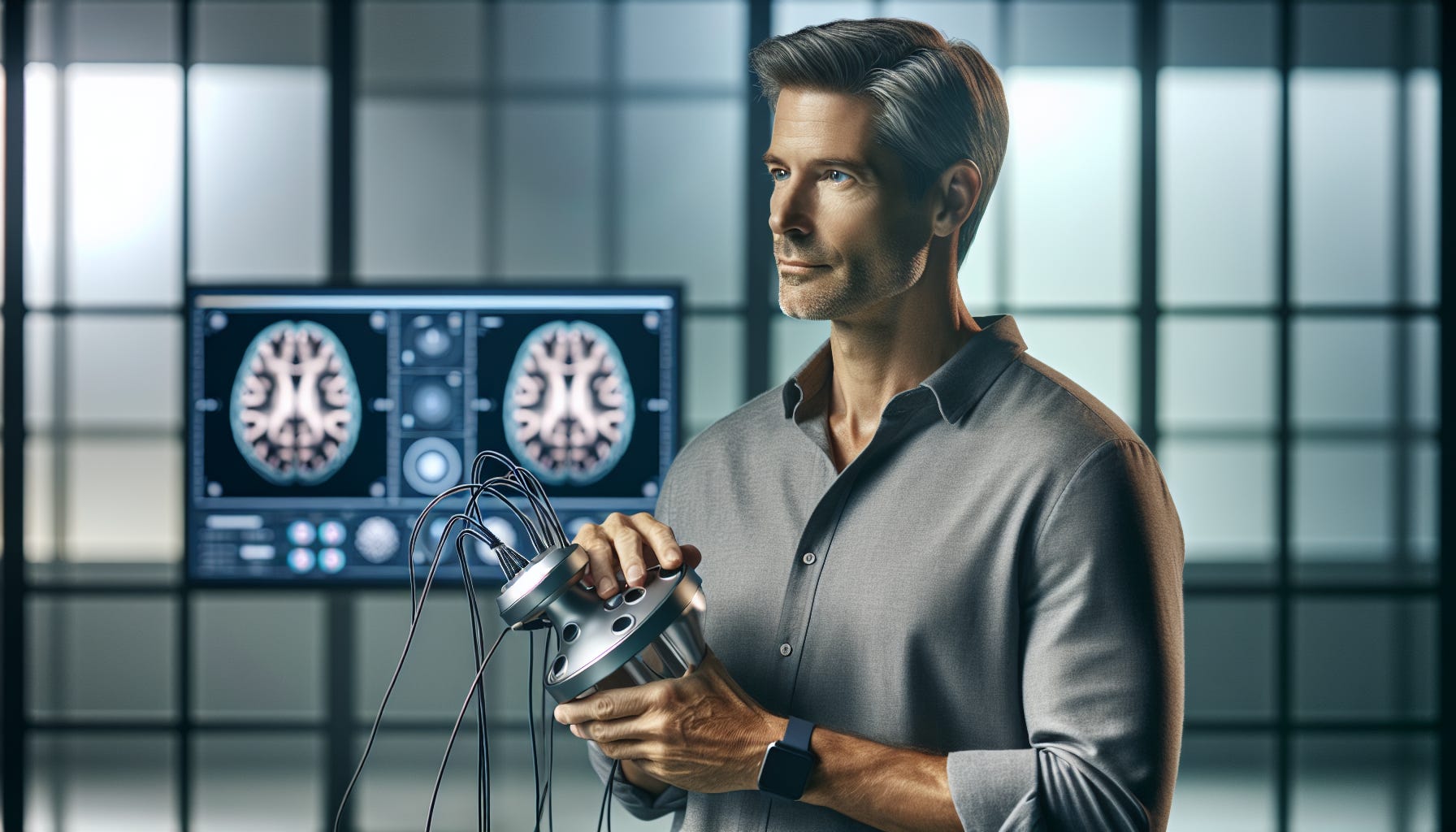
Electric brain stimulation has a marketing problem. The pitch sounds almost too good: strap a headset on your skull, run a gentle current through your prefrontal cortex, and watch your cognitive performance climb. Tech forums are full of testimonials. Biohackers post protocols with missionary zeal. And consumer devices now sell for a few hundred dollars on the internet, no prescription required.
But here’s the thing — the science underneath all that enthusiasm is simultaneously more fascinating and more sobering than the boosters admit. Researchers genuinely can alter how neurons fire using nothing but carefully placed electrodes and milliamps of current. The effects are real. The disagreements are about which effects, how large, and whether any of it translates to the thing most people actually care about: getting smarter.
Let’s take a serious look at what the research actually shows, where the genuine promise lives, and why “I zapped my brain for 30 days and my IQ went up” might not mean what you think.
What brain stimulation actually does
Before we can talk about boosting intelligence, it helps to understand what these devices are physically doing to your neurons. The two most studied techniques are transcranial direct current stimulation (tDCS) and transcranial magnetic stimulation (TMS), and they work through different mechanisms.
tDCS sends a weak, steady electrical current — typically between 1 and 2 milliamps — through electrodes placed on your scalp. That current flows between an anode (positive electrode) and a cathode (negative electrode), and the area of cortex under the anode tends to become more excitable while the area under the cathode becomes less so. Think of it as turning a regional dimmer switch slightly up or down. Nothing dramatic happens electrically — you might feel a mild tingling or warmth. But at the cellular level, anodal stimulation nudges neurons closer to their firing threshold, which appears to enhance certain kinds of information processing in the targeted region. 🔬
tDCS uses a continuous low current, is cheap and portable, and requires no special expertise to operate
TMS uses magnetic pulses to induce brief electrical currents in deeper cortical tissue, requires clinical equipment, and can produce effects that last significantly longer
tACS (transcranial alternating current stimulation) is the newcomer — it oscillates at specific frequencies to entrain existing brain rhythms rather than just raising or lowering neural excitability
HD-tDCS (high-definition tDCS) uses smaller, more precise electrode configurations to target specific brain regions with less spread
The reason researchers care so much about the dorsolateral prefrontal cortex (DLPFC) is that this region sits at the intersection of working memory, executive control, and fluid reasoning. If you’re going to nudge a region in hopes of smarter thinking, the DLPFC is the obvious starting point. Does it work? That’s where things get complicated. 🧬
What the evidence actually shows — the good news first
Let’s start where the science is clearest, because there is something real here. A 2021 meta-analysis of 82 randomized controlled trials including nearly 2,800 participants found that both TMS and tDCS produced small but statistically significant improvements in working memory (effect size around 0.17 for both techniques) and that tDCS additionally improved attention and vigilance. These effects held across different types of brain disorders — depression, schizophrenia, Parkinson’s disease, stroke recovery.
That’s not nothing. A working memory boost, even a small one, has genuine downstream effects on learning, reasoning, and task performance. And in populations with compromised cognition, “small” improvements can mean the difference between functional independence and struggling to manage daily life.
In older adults specifically, the results look promising:
Anodal tDCS over the DLPFC produced significant gains in attention, information processing speed, and short-term memory in a University of Alberta study of adults between 65 and 86 years old
A systematic review of randomized controlled trials published between 2015 and 2025 specifically examining healthy older adults found consistent evidence for cognitive benefit, with results most pronounced at stimulation intensities of 1.5–2 mA over 20-minute sessions
Research from a 2024 Frontiers in Psychology editorial synthesis found that older individuals with higher education levels showed especially strong responses to tDCS, while younger people responded better to tACS
The tACS story is arguably more interesting than tDCS for cognitive enhancement specifically. ⚡ Rather than just pushing neural excitability up or down, tACS entrains the brain’s own oscillatory rhythms. Research published in PLOS ONE found that theta-frequency tACS over the left parietal cortex produced measurable increases in fluid intelligence performance — particularly on difficult reasoning items. A separate line of research showed that gamma-frequency tACS (40 Hz) over the left prefrontal cortex shortened the time participants needed to solve abstract reasoning problems.
The mechanism here is genuinely elegant: fluid intelligence appears to rely on efficient communication between the parietal and prefrontal cortices, and synchronizing oscillatory activity in those regions seems to make the neural “conversation” more efficient. What does that feel like? Probably something like finding yourself solving hard problems slightly more fluidly — not a sudden burst of genius, but a reduced friction. Have you ever noticed that some days your thinking just flows better? tACS might be artificially inducing that state.
The inconvenient results
Here’s where I have to disappoint the biohackers a little. If you’re hoping to sit down with a tDCS headset and walk away with a meaningfully higher IQ score, the evidence should give you serious pause. 💡
The most pointed study on this comes from Flavio Frohlich’s lab at UNC School of Medicine. In a double-blind, randomized, sham-controlled study published in Behavioural Brain Research, 40 healthy adults took the WAIS-IV — a gold-standard, comprehensive IQ test — before and after either real tDCS over the frontal cortex or fake stimulation. The results were the opposite of what the boosters would predict:
The sham group’s IQ scores improved by about 10 points (largely due to practice effects)
The tDCS group’s scores improved by only about 6 points on average
Specifically, tDCS reduced improvement on the perceptual reasoning subtest
Frohlich’s interpretation is worth sitting with: “It means that some of the most sophisticated things the brain can do, in terms of cognition, can’t necessarily be altered with just a constant electric current.” The prefrontal cortex already handles complex cognition through intricate patterns of oscillating neural activity. Flooding it with a simple direct current may actually interfere with those patterns rather than enhance them. 🔬
This aligns with a key insight from the broader tACS research: the brain is not a static system you can nudge in a single direction. It communicates in rhythms. Crude DC stimulation can raise or lower excitability, but it doesn’t care about the timing. That’s probably why the effect profile for tDCS on IQ looks inconsistent, domain-specific, and sometimes backwards.
Other complicating factors the field is actively wrestling with:
Inter-individual variability is enormous — skull thickness, brain anatomy, baseline cognitive state, and even genetics (particularly BDNF and COMT gene variants) all influence how strongly and in what direction a person responds to stimulation
The replication crisis has touched this field too — researchers at the Frontiers in Human Neuroscience noted in a 2023 editorial that reliability and reproducibility remain significant challenges in brain stimulation research, particularly for non-invasive techniques
Timing effects are underappreciated — whether tDCS is applied before, during, or after a cognitive task changes the direction of the effect on learning consolidation
The consumer device question
The commercial application of tDCS is moving much faster than the science. In late 2025, Flow Neuroscience became the first company to receive FDA approval for an at-home tDCS device, though the approval was specifically for major depressive disorder, not cognitive enhancement. The evidence for that particular application is actually reasonably solid — a 2024 phase 2 trial involving 174 participants showed participants using the headset for 30-minute sessions over 10 weeks were roughly twice as likely to experience depression remission compared to sham controls. 💊
Flow subsequently acquired Halo Neuroscience, which sells what it describes as identical hardware as a wellness device — available without a prescription. This creates a genuinely strange regulatory situation: you can buy the same hardware marketed as consumer wellness, or get a near-identical device by prescription for depression treatment. The FDA’s framing of the benefit as “modest, but sufficient to outweigh probable risk” tells you something about the magnitude we’re discussing.
If you’re considering a consumer tDCS device for cognitive enhancement specifically, here’s an honest framework:
The evidence for mood, sleep, and attention benefits in general populations is more encouraging than the evidence for IQ-type gains
Effects are likely to be most noticeable if you have some baseline deficit in the domain you’re targeting — healthy, high-performing people may see smaller effects or none at all
Combining tDCS with simultaneous cognitive training appears to produce larger effects than either alone, per research on neuroplasticity-based enhancement
Safety at standard consumer currents (1–2 mA, 20–30 minute sessions) appears solid — skin redness and mild tingling are the most common complaints, with no evidence of lasting harm in healthy adults at standard doses
Robert Reinhart, an associate professor at Boston University who studies brain stimulation, has called the overall evidence base for tDCS “mixed” — even as he acknowledges that the FDA approval for depression treatment is a meaningful moment for the field. That’s probably the right calibration. Not hype, not dismissal.
Where the science is headed
The most exciting work in cognitive enhancement via brain stimulation is moving toward personalized, oscillation-targeted protocols — the stuff tACS and closed-loop stimulation make possible. ⚡
Instead of applying the same protocol to everyone and hoping for the best, researchers are increasingly measuring a person’s individual EEG rhythms and tailoring the stimulation frequency and timing to match. A 2025 clinical trial currently recruiting participants (NCT07095218) is combining gamma tACS with EEG measurement of theta-gamma coupling — one of the most theoretically grounded approaches to intelligence enhancement yet attempted.
The trajectory of the field looks something like this:
2000–2015: tDCS boom, enthusiasm, early mixed results
2015–2022: Replication failures, sobering meta-analyses, recognition that one-size-fits-all protocols are the wrong approach
2022–present: Personalized protocols, closed-loop systems, tACS entrainment, combination approaches with cognitive training and exercise
Near future: FDA-regulated cognitive enhancement devices? Possibly — though the regulatory pathway for enhancing healthy brains rather than treating disease is genuinely uncharted territory
The honest answer to the question in this article’s title is: brain stimulation probably can’t boost your IQ in the headline-grabbing, 10-points-permanently sense. What it may do — particularly with tACS and well-designed personalized protocols — is temporarily improve specific cognitive processes like working memory, attention, and fluid reasoning. In some populations, especially older adults or those with depression, those effects could be clinically meaningful. In healthy young adults already performing near their ceiling, the effects might be negligible or even counterproductive. 🧬
The brain isn’t a muscle you can simply shock into strength. It’s closer to an orchestra — and the question isn’t whether to turn up the volume, but whether you can improve the timing.
What would actually change your mind about brain stimulation — a large, preregistered trial showing IQ gains in healthy adults, or better evidence that the effects we already see in clinical populations generalize beyond the lab?