

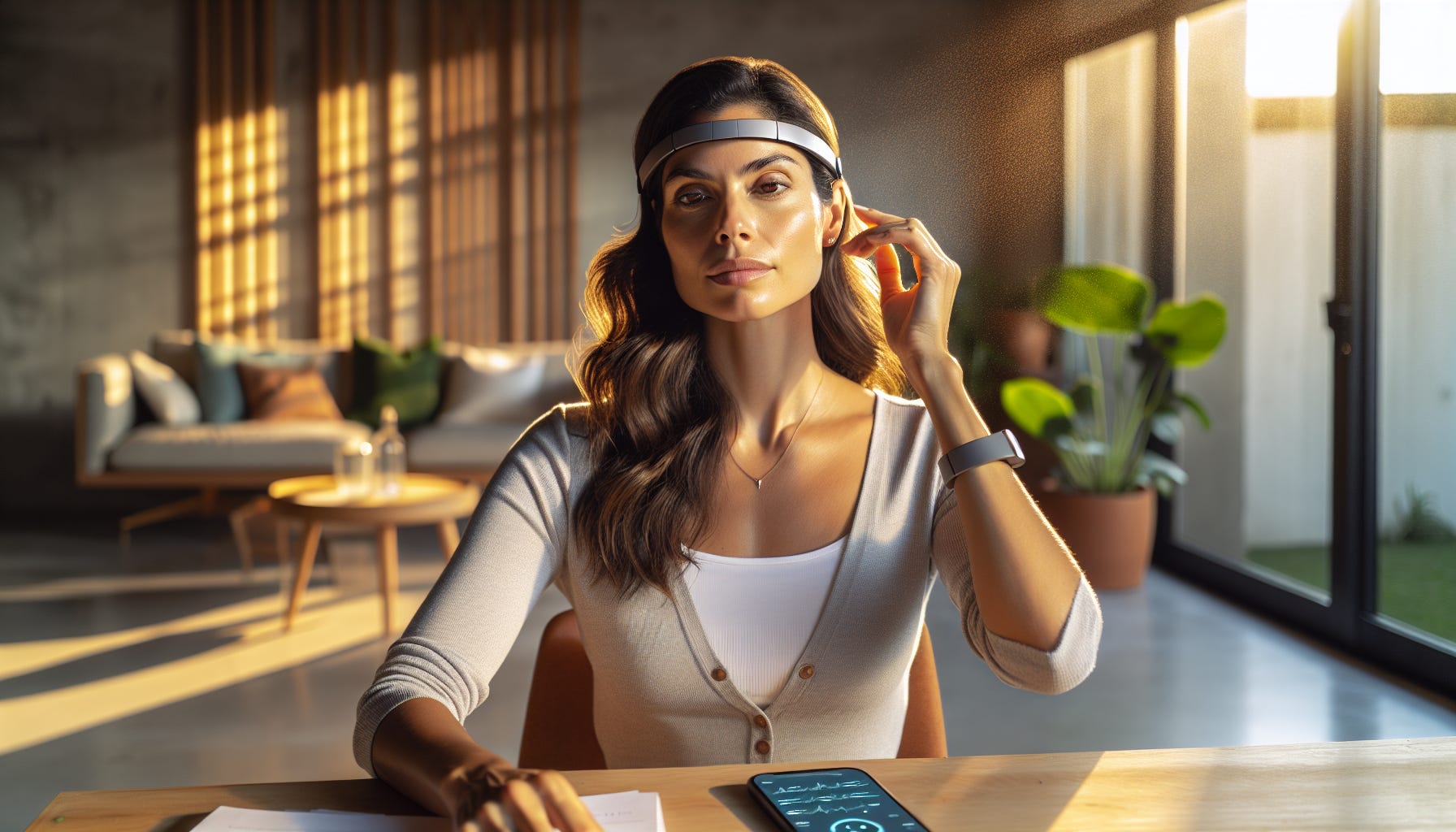
Anxiety keeps millions stuck in a loop of worry while therapy waitlists stretch for months and pills bring their own baggage. New brain devices change that equation. They read your brain activity or send gentle currents to key areas so you dial down the stress response yourself. These tools hit the market fast in 2025 and 2026, and early users report calmer days without appointments or prescriptions. I think they work best as partners to lifestyle changes rather than magic fixes, yet the convenience stands out.
Neurofeedback and stimulation target anxiety at the source
Neurofeedback devices pick up EEG signals from your scalp and give instant audio or visual cues when your brain shifts toward calm patterns. tDCS headsets deliver low-level current to tweak activity in mood-related regions like the prefrontal cortex. Both avoid drugs completely. 🧠 ⚡ 🧬 The idea sounds high-tech, but the experience feels simple. You wear a comfortable band, open an app, and follow guided sessions that reward relaxed brain states.
Alpha-Stim clips to your earlobes for quick sessions. Flow Neuroscience and Roga Life use targeted stimulation to cut cortisol and ease rumination. Recent studies back their approaches for stress reduction.
EEG headbands like Muse show your brainwaves live so you learn to produce more alpha waves
tDCS devices such as Flow Neuroscience FL-100 gently boost activity in areas linked to mood regulation
CES options like Alpha-Stim deliver mild currents through ear clips
Home sessions last 20 to 40 minutes and fit into lunch breaks or evenings
Data tracking builds patterns over weeks to show progress
What does your own anxiety pattern look like on a typical day? These gadgets make that visible for the first time.
Leading devices you can actually use today
Muse S remains popular because the fabric headband feels good for longer sessions and the app turns meditation into a game with soundscapes that respond to your focus. Flow Neuroscience gained FDA approval for its FL-100 tDCS headset in December 2025, making prescription at-home treatment available for mood issues including anxiety overlap. Roga Life sits behind the ears like headphones and stimulates nerves to halve stress symptoms in some users. 💡 📈 🔬
Myndlift and Mendi offer more affordable neurofeedback entry points for people who want to train attention and calm together.
Muse S excels at guided meditation with real-time brainwave scoring
Flow FL-100 brings clinical-grade tDCS into living rooms under doctor supervision
Roga Life targets stress directly with portable nerve stimulation
Myndlift pairs with clinician guidance for personalized anxiety protocols
Mendi uses fNIRS and EEG feedback for accessible home training
Check 7 surprising ways brain-computer interfaces already appear in daily life for more everyday examples. I like how these avoid the waitlist problem entirely.
Evidence and limitations shape realistic expectations
Clinical results look promising but stay mixed. Muse users often report lower anxiety scores after consistent use. Flow’s trials showed strong remission rates for depression, with anxiety benefits following similar paths. Roga’s research indicates measurable drops in worry. Still, individual responses vary by how well the device fits your head and how regularly you use it. 💊 🧬
No device replaces professional care for severe cases. They shine as bridges or daily tools when therapy access lags.
Consistent daily use over four to eight weeks usually shows the biggest shifts
App integration keeps sessions engaging with progress graphs
Side effects stay mild, mostly skin irritation or mild headaches at first
Cost range runs from a few hundred dollars to prescription models
Insurance pathways start opening for some approved devices in 2026
Read more on 6 signals that neurotech is reaching a tipping point to see where the field heads next. Privacy matters here because your brain data reveals sensitive patterns.
Choosing the right device and getting started
Match the tech to your lifestyle. Busy people like the quick ear-worn Roga option, while meditation fans pick full headbands. Start small and track how you feel after two weeks. 🌱 💡
For the science basics, see the neurofeedback page on Wikipedia. Visit the transcranial direct current stimulation overview and Flow Neuroscience for the latest on their tDCS approval.
Budget buyers begin with entry-level EEG bands under $400
Clinically focused users pursue prescription tDCS with doctor oversight
Tech enthusiasts experiment with open platforms for custom protocols
Stress-first routines favor quick nerve stimulators for on-demand relief
The FDA moves in late 2025 signal faster access ahead. These devices do not fix everything, but they give people tools to manage anxiety on their own schedule.
Would you try a brain device for anxiety relief if it meant skipping the waitlist and side effects?