

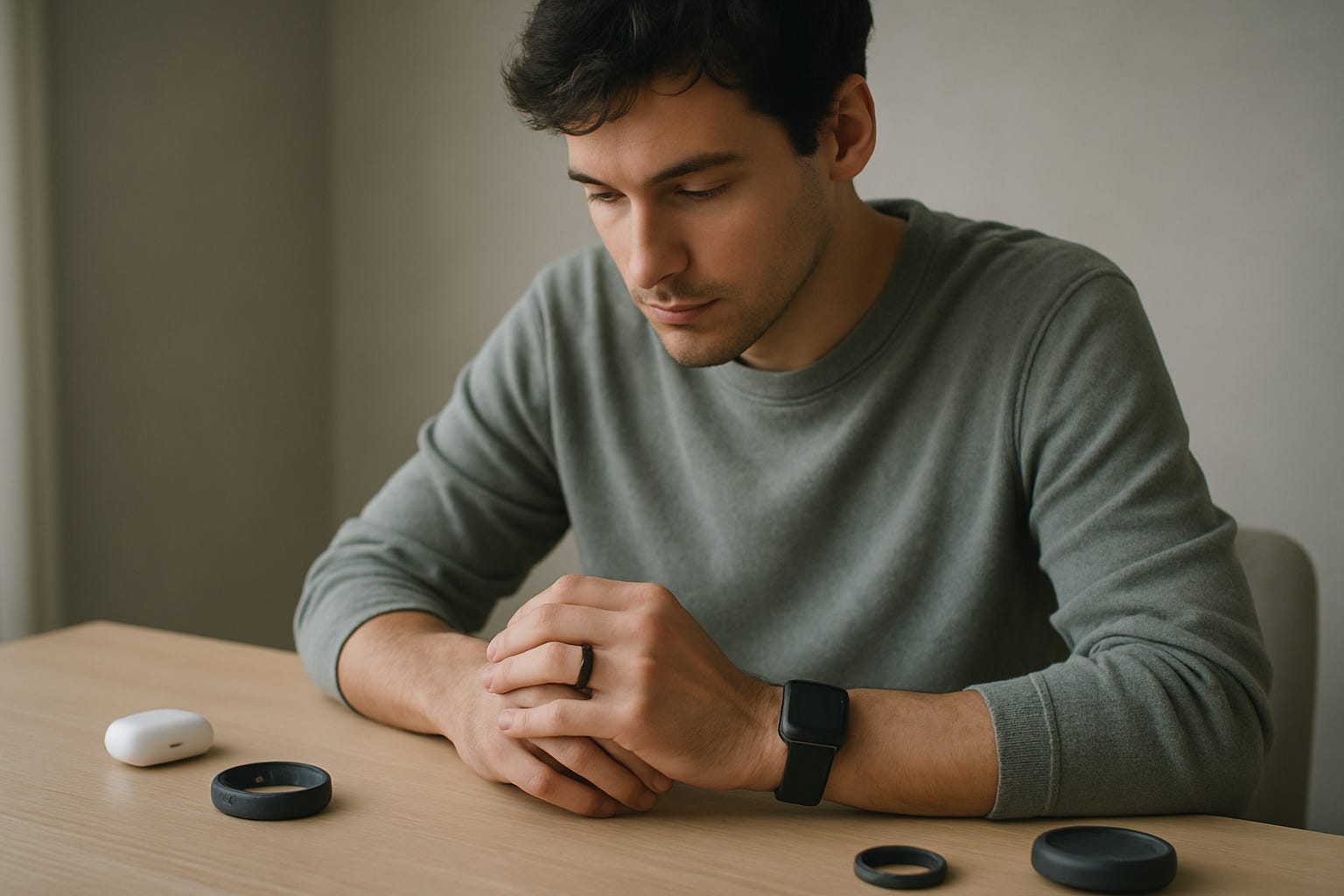
Here’s a thought that might ruin your morning routine in the best possible way: you’re probably already a neurotech user. Not in the “sci-fi implant” sense that Neuralink headlines love to conjure, but in the quieter, more interesting way — the kind where the device on your wrist or tucked in your ears is doing something to your nervous system that its own marketing barely bothers to mention.
Neurotechnology, at its core, is any device that reads from or writes to the nervous system. That definition is broader than most people realize, and it means a surprising number of gadgets you already own qualify. The global neurotech market is on track to grow from roughly $15–17 billion in 2025 to over $47 billion by 2035, according to market projections cited by researchers tracking the sector’s expansion — and a big chunk of that growth is already sitting on consumer shelves, wrapped in lifestyle branding that says “wellness” or “audio” or “recovery” rather than anything that sounds remotely like brain science.
This isn’t a list of speculative future products. Every single device below is real, available, and probably more interesting than the box it came in suggests. And if you’ve been curious about whether neurotech is actually close to you yet — the answer, it turns out, was yes all along. You can also check what the broader tipping point for this industry looks like to understand why this moment matters.
1. The Oura Ring — a sleep tracker that reads your nervous system 🧠
The Oura Ring markets itself as a sleep and wellness tracker. Small, titanium, looks like a stylish band. But what it actually does — continuously, every night you wear it — is measure the autonomic nervous system in ways that would have required a clinical lab setup a decade ago.
Inside that unassuming ring sit infrared photoplethysmography sensors, a thermistor, and a three-axis accelerometer. Together, they reconstruct your heart rate variability (HRV): the millisecond-level fluctuation between heartbeats that reflects how your ANS is balancing its sympathetic (”fight or flight”) and parasympathetic (”rest and digest”) branches. HRV is one of the most studied proxies for brain-body regulation in neuroscience, used in research on stress, cognitive load, and recovery.
A peer-reviewed study published in Sensors and conducted by researchers at Brigham and Women’s Hospital found the Oura Ring was the most accurate consumer sleep tracker in four-stage sleep classification compared to polysomnography, outperforming both the Apple Watch and Fitbit Sense. Specifically:
The ring achieved 79% agreement with polysomnography in four-stage sleep classification
It was 5% more accurate than Apple Watch and 10% more accurate than Fitbit on the same metric
It was the only device that did not significantly overestimate or underestimate any of the four sleep stages
Polysomnography, by the way, is the gold-standard sleep test — a full-night study with electrodes monitoring brain waves, eye movements, and muscle activity. The fact that a $300 ring approaches its accuracy is, frankly, remarkable. The catch, of course, is that the ring is not FDA-cleared as a medical device and cannot diagnose anything. But it’s reading your nervous system every single night. 🔬
What does this mean for you? If you wake up and check your “readiness score,” you’re looking at an algorithmic summary of how your autonomic nervous system performed while you slept. That’s neurotech. It just doesn’t say so on the box.
2. Apple Watch — your cardiac neural monitor that also tells time ⌚
The Apple Watch has been the most popular wrist-based activity tracker for years, with roughly 58% of all wrist-worn health trackers sold in the U.S. being Apple Watches, according to research cited in the Brigham and Women’s sleep validation study. Most people wear it to count steps and check notifications. They may not fully appreciate what they’re strapping to their wrist.
Apple’s ECG app, available since Series 4, uses a single-lead electrocardiogram chip to record the electrical activity of your heart. This is direct biopotential measurement — the same fundamental technology used in hospital cardiac monitoring rooms, miniaturized to a watchband. When Apple then added atrial fibrillation detection and, as of late 2024, sleep apnea monitoring via its breathing disturbance algorithm, the device crossed into genuinely clinical territory. The FDA cleared each of these features separately.
Here’s what the device is actually doing to earn those clearances:
Detecting irregular atrial rhythm using machine learning trained on millions of ECGs
Estimating autonomic nervous system tone through overnight HRV measurement
Flagging respiratory disruptions during sleep that correlate with apneic events
Measuring blood oxygen saturation (SpO2), which reflects both pulmonary and neural oxygen delivery
The sleep apnea feature is particularly significant from a neurological standpoint. Sleep apnea is not just a breathing problem — repeated oxygen deprivation during sleep has documented effects on hippocampal volume, executive function, and long-term dementia risk. A watch that can flag these events in someone who had no idea they were happening is doing something genuinely important for brain health. 🧬
Is it a brain-computer interface? No. But it reads biopotential signals from your body’s nervous system and translates them into clinical health alerts. The line between “consumer wearable” and “medical-grade neurotech” is thinner here than Apple’s marketing department would probably prefer to admit.
3. Neurable MW75 Neuro headphones — the BCI you thought was just good audio 🎧
Now we get into territory that should genuinely surprise you. The Neurable MW75 Neuro headphones look, from the outside, like a pair of premium over-ear headphones — the kind you might buy to block out a noisy open office or soundtrack a long flight. They are, in fact, a brain-computer interface you wear on your head while listening to music.
In partnership with audiophile brand Master & Dynamic, Neurable embedded 12-channel dry EEG electrodes into the earcup fabric of the MW75. These sensors pick up electrical activity from your scalp — the same signals a clinical EEG machine records — with a bandwidth of 0 to 131 Hz and true DC coupling. While you work, the headphones monitor your cognitive state in real time.
The MW75 Neuro’s companion app:
Tracks focus levels over the course of your work session
Detects cognitive fatigue and attention drift using machine learning trained on EEG patterns
Can silence notifications automatically when you enter deep focus states
Logs your brain’s daily performance trends over weeks
The fact that Neurable — a Boston-based BCI company — launched this not as a research device but as a commercial product at $399 matters enormously. It means that the consumer BCI era isn’t just approaching; it’s already here, hanging on the headphone hooks of people who think they bought a nice pair of cans. This is exactly the kind of consumer-ready BCI shift we’ve been tracking closely.
Neurable CEO Ramses Alcaide frames this as “the beginning of BCI-enabled technology for all.” I think that’s probably right — and I think most people who bought these headphones have no idea they’re early BCI adopters. 🔬
4. AirPods Pro — FDA-cleared medical devices in your ears right now 👂
In September 2024, the FDA did something it had never done before: it authorized the first over-the-counter hearing aid software for a consumer product. The product was the Apple AirPods Pro 2. The AirPods Pro 3, launched in September 2025, carries the same FDA-cleared hearing aid capabilities forward.
Let that land for a moment. The earbuds that hundreds of millions of people use to listen to podcasts and take calls are now also, officially, FDA-cleared medical devices for people with mild to moderate hearing loss. Apple applied via the de novo premarket review pathway — the same route used for novel devices without existing substantial equivalents. The FDA had never cleared software-only hearing aids before.
What the hearing aid feature actually does:
Runs a personalized hearing test through the iPhone, calibrating to the user’s specific hearing profile
Applies computational audio processing to boost speech frequencies the user struggles with
Uses machine learning to separate and clarify speech in noisy environments
Adjusts continuously and in real time, adapting to each acoustic environment
Hearing is fundamentally a neurological process. The cochlea converts physical sound waves into electrical signals that the auditory nerve carries to the brain’s auditory cortex. When hearing is impaired and a device compensates for that impairment by modifying the signal before it reaches the ear, that’s neurotechnology. Full stop. The FDA’s own announcement uses the word “hearing aid” without qualification.
An estimated 37.5 million American adults have some degree of hearing loss, according to the National Institute on Deafness and Other Communication Disorders. The vast majority go untreated — partly due to stigma, partly due to cost. AirPods Pro have just made FDA-cleared hearing assistance so frictionless that most people will never even think of it as a medical intervention. That’s probably how it should work. 🧠
Have you ever wondered what else your earbuds are doing besides playing audio? This might be the moment to look into it.
5. Vagus nerve stimulators — stress relief devices doing direct neuromodulation 🌿
The vagus nerve is the longest cranial nerve in the body, a wandering cable running from the brainstem through the chest and into the abdomen, regulating heart rate, digestion, inflammation, and mood. Stimulating it electrically has been an approved treatment for epilepsy and depression since the late 1990s — but those were implanted devices requiring surgery. The consumer versions came much later and much quieter.
Devices like the Pulsetto and Truvaga Plus deliver transcutaneous vagus nerve stimulation (tVNS) by placing electrodes on the neck or behind the ear, where the nerve runs close to the surface. The Truvaga Plus, made by electroCore — the same company that makes the gammaCore, which is FDA-cleared for migraine and cluster headache treatment — operates at around 25 Hz, aligned with studied clinical parameters. Neither consumer device is FDA-cleared as a medical product, but the underlying mechanism is not in dispute: they are directly stimulating the vagus nerve with electrical current.
The independent testing site Innerbody, which tested multiple devices head-to-head, found that Truvaga Plus produced “the fastest and most noticeable effects for focus, stress, and sleep quality” compared to competing products. Pulsetto, a European brand, holds FCC certification and has been adopted by hundreds of thousands of users seeking a drug-free approach to anxiety and sleep support.
What users experience:
A mild buzzing or tingling sensation at the stimulation site
Reported reductions in subjective stress, sometimes within minutes
Improved sleep onset over weeks of daily use
Shifts in HRV that reflect increased parasympathetic activity
The critical thing to understand is the mechanism. These devices are not delivering “gentle vibrations” or “relaxing pulses” in the way that a massage chair might. They are applying electrical current to a cranial nerve that directly modulates brain stem activity, including the locus coeruleus — the brain’s primary norepinephrine center. That’s a specific neurological intervention. The wellness industry just hasn’t given it that name. ⚡
6. TENS and EMS devices — the gym gadgets that work by hijacking nerves 💪
Walk into any sports performance shop, Amazon warehouse, or physio clinic and you’ll find them: TENS (transcutaneous electrical nerve stimulation) and EMS (electrical muscle stimulation) units, sold as muscle recovery and pain relief tools. Therabody’s PowerDot 2.0, Compex’s range of devices — these are in gym bags across the world.
What they are, technically, is electrical neurostimulators. They work by delivering electrical pulses through electrode pads placed on the skin, targeting sensory and motor nerves directly:
TENS works by stimulating sensory nerve fibers, which activates spinal gate-control mechanisms to block pain signals — a concept rooted directly in neuroscience first described by Melzack and Wall in 1965
EMS/NMES (neuromuscular electrical stimulation) bypasses voluntary motor control and forces muscle contractions by stimulating the motor nerves innervating a muscle group
The two are often combined in the same device, addressing both pain and activation
Before EMS became popular for sports recovery, it was a clinical tool developed in the 1960s to prevent muscle atrophy in patients with nerve injuries and post-orthopedic surgery. The jump to consumer sports products changed the branding entirely but not the underlying mechanism. When you slap those pads on your quads after a long run and hit “recovery mode,” you’re using technology derived from clinical neuroscience. 🔬
PowerDot, now under the Therabody umbrella, integrates with fitness apps to tailor stimulation programs to your specific workout history — an early version of the closed-loop neuromodulation that researchers are building toward in clinical settings. The fact that you’re also listening to a podcast while it runs doesn’t make it any less neuro.
I’ll be honest: I think most people who own one of these devices would not describe themselves as neurotech users. They probably should.
7. Muse headband — a real EEG machine sold as a meditation coach 🧘
The Muse headband has been on the market since 2014. It’s a soft headband with embedded EEG sensors on the forehead and behind the ears, connected to an app that translates your brain wave activity into real-time audio feedback during meditation. When your brain is calm, you hear birdsong. When attention wanders, the app plays the sound of a storm picking up.
This is neurofeedback — a clinical technique with roots going back to the 1960s, where practitioners use real-time EEG data to train people to shift their own brain states. The Muse S model added the ability to track sleep stages directly through EEG, and researchers have used it in published studies. It is not a research-grade clinical device, but it is measuring actual brain electrical activity — delta waves, theta waves, alpha waves — and using that data to shape a behavioral feedback loop.
Key things the Muse tracks using real EEG signals:
Alpha wave activity (8–12 Hz), associated with relaxed, unfocused attention
Theta wave patterns (4–8 Hz), which increase during deep meditation and light sleep
Delta activity (0.5–4 Hz) during deep sleep stages
Gamma oscillations (30+ Hz) during periods of heightened cognitive engagement
The Muse Sleep app specifically uses this data to calculate sleep stages in a way comparable to how clinical EEG-based systems approach it. For anyone interested in what’s happening in their brain during meditation, this is genuinely fascinating — and the science of brain stimulation and cognitive change is a useful backdrop for understanding what neurofeedback is actually trying to do.
The honest caveat: consumer EEG accuracy drops off compared to clinical systems with gel electrodes and trained technicians. But the signals are real. The feedback loop is real. And for many users, the shift in self-awareness about their own mental states is real too. 🧬
The Muse is probably the most transparent neurotech device on this list — it’s genuinely trying to tell you it’s reading your brain. Somehow, even so, most people who’ve heard of it still think of it as a meditation gadget rather than what it technically is: a portable EEG system with a built-in neurofeedback protocol.
The bigger picture — neurotech without the label ⚡
What all seven of these devices have in common isn’t a technology — it’s a category error in how they’re sold. Consumer products land in categories like “wellness wearable,” “premium audio,” “recovery tool,” or “mindfulness aid.” Those categories are not wrong, exactly, but they obscure the underlying science in a way that matters.
It matters because:
Understanding what a device actually does shapes how you use it and what you expect from it
The data these devices generate about your nervous system is genuinely sensitive, and you probably want to know what’s happening to it
Neural data privacy is one of the most underexplored issues in consumer tech, and it’s only going to become more relevant as these devices get more capable
The “wellness” framing sometimes creates inflated expectations that the actual mechanism can’t meet — and sometimes undersells capabilities that are legitimately impressive
The neurotechnology sector surpassed $1.3 billion in disclosed funding in 2025 alone, according to data tracked by researchers in the space. Investors are betting at that scale because the hardware is real, the science is solid, and the consumer adoption is already well underway — in your gym bag, on your finger, and in your ears.
The question isn’t whether neurotech is coming to your life. It’s already there. The question is whether you want to actually understand what the devices around you are doing to your nervous system — and what that understanding might change about how you use them.
Which of these seven devices surprised you the most? Drop your reaction in the comments — I’m curious whether it’s the headphones, the earbuds, or something else entirely that reframes how you think about what you already own. 👇