

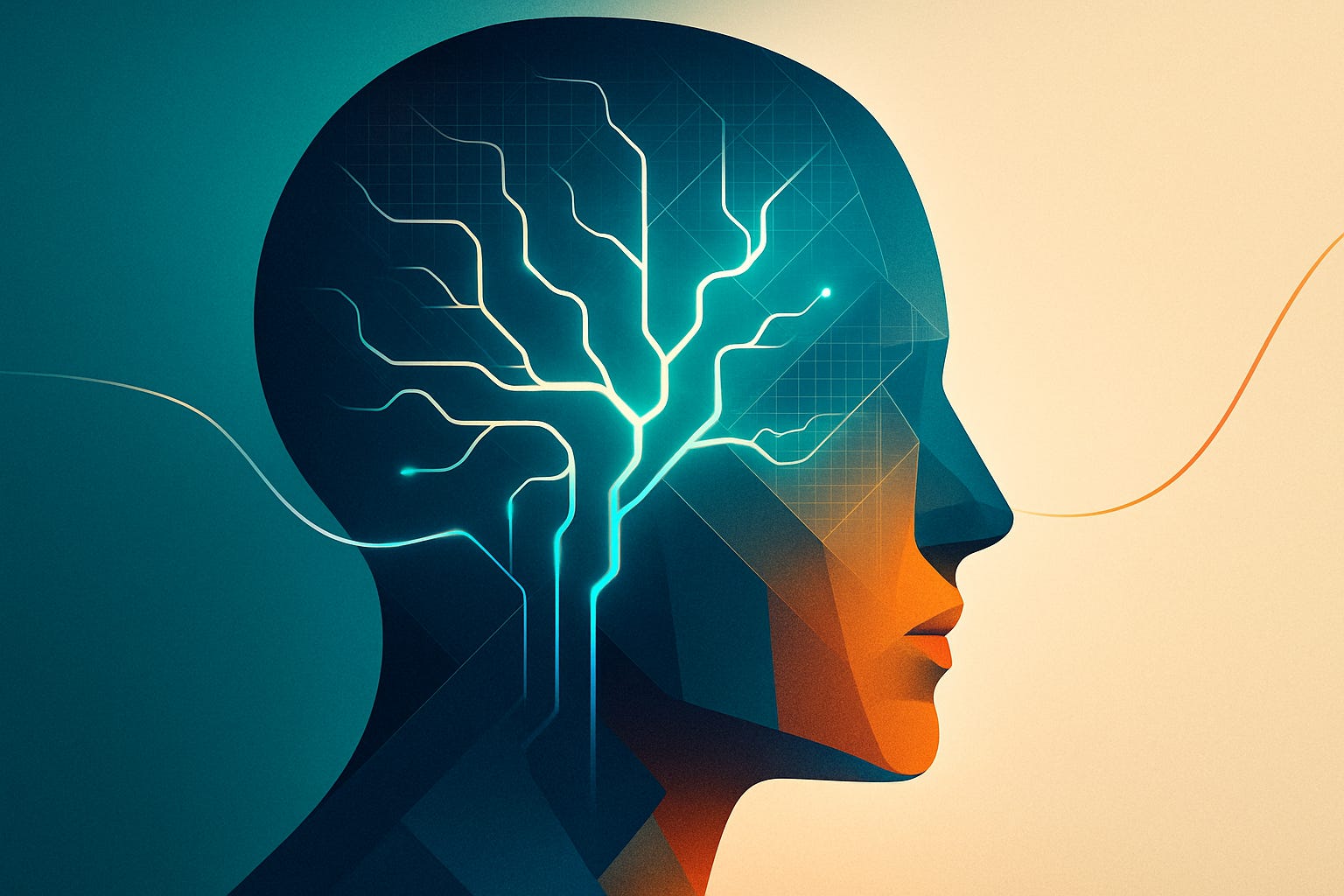
Picture a product manager at her desk before a big pitch, wearing what looks like a pair of oversized headphones, except instead of music she’s sending a weak electrical current straight into her prefrontal cortex. This isn’t a scene from a cyberpunk novel. It’s a fairly normal Tuesday for a slice of the tech world that has spent the last decade convinced you can overclock a human brain the same way you’d overclock a processor. The technique is called transcranial direct current stimulation, or tDCS, and it just crossed a line nobody expected: in December 2025 the FDA approved the first at-home version for treating depression. So is this legitimate neuroscience or expensive placebo with electrodes? Both, honestly, depending on which device you’re holding. 🧠
What tDCS actually does to your brain
The mechanics are almost embarrassingly simple. Two electrodes, a 1 to 2 milliamp current, and a session that runs 20 to 30 minutes. That’s it. Unlike transcranial magnetic stimulation (TMS), which uses magnetic pulses to make neurons fire, tDCS doesn’t force anything to happen. It just nudges the resting electrical charge of neurons in the stimulated region, making them slightly more or less likely to fire on their own. Think of it less as flipping a switch and more as tilting the table the neurons are already playing on. ⚡
A few things make tDCS different from its flashier cousins:
It’s non-invasive, no surgery, no implant, just scalp contact
It’s cheap to build, which is exactly why hobbyists have been soldering their own since the 2000s
It has a genuinely large research base, over 100 peer-reviewed studies according to device makers, though the quality of that evidence varies wildly
The direction of the effect depends heavily on electrode placement and current polarity, which is part of why home users get such inconsistent results
That last point matters more than the marketing copy ever admits. Flip the electrode polarity and you can get the opposite of what you intended, which is a strange thing to leave in the hands of someone following a YouTube tutorial.
How a Silicon Valley headset turned it into a wellness product
The company that made tDCS a household name in tech circles was Halo Neuroscience, founded by Daniel Chao and Brett Wingeier and launched with the Halo Sport headset in 2016. The pitch was pure Silicon Valley: strap it on during your workout, stimulate your motor cortex, and your muscle memory training supposedly locks in faster. Olympic sprinter Michael Johnson wore one. The U.S. Ski and Snowboard team tested it. A presale sold out so fast the company had to pause orders.
Then came the part the press releases skip. Halo didn’t survive the pandemic, and in February 2021 another neurotech company bought its technology for an undisclosed sum. That buyer, Flow Neuroscience, had been building tDCS devices for depression, not deadlifts, and the acquired tech has since resurfaced as a consumer headset marketed for mood, sleep, and focus rather than athletic performance. It’s a neat little parable for the whole category: the use case keeps shifting because nobody’s entirely sure what the proven use case even is. 🔄
The science is real, but it’s messier than the marketing
Here’s where I have to disappoint the biohackers a little. tDCS research genuinely shows some working-memory and mood benefits in controlled settings. But when researchers at UNC’s Frohlich lab actually tested whether tDCS could raise IQ scores using the gold-standard WAIS-IV test, the sham group improved more than the real stimulation group. We covered the full breakdown, including why the effect seems to reduce performance on certain reasoning subtests, in can you actually boost your IQ with brain stimulation.
Why the mixed results? A few reasons keep showing up in the literature:
Skull thickness and brain anatomy vary enormously between people, and both change how much current actually reaches the target region
Genetics, particularly the BDNF and COMT gene variants, appear to influence who responds and who doesn’t
A 2023 Frontiers in Human Neuroscience editorial flagged reliability and reproducibility as ongoing problems for non-invasive stimulation research generally
Most studies run for days or weeks, so nobody has great data on what happens after years of regular use
None of that makes tDCS fake. It makes it a tool whose effects depend on precisely who’s using it, on what, and how, which is a much less exciting sentence than “zap your way to genius.” Have you ever tried one of these headsets? I’d genuinely like to know if it felt like anything at all. 👇
The DIY crowd and the safety question mark
Because a tDCS rig is basically a battery and two sponges, a whole self-experimentation subculture grew up around it, centered on forums like the r/tDCS community on Reddit and cheap gaming-focused devices that never went through formal clinical review. Most of these products carefully avoid calling themselves medical devices, which conveniently drops them into a regulatory gray area with almost no oversight.
The risks aren’t theoretical. A panel of tDCS researchers writing in a peer-reviewed regulatory review pointed specifically to uncontrolled DIY-tDCS as the source of permanent injury risk, and documented an old case where a subject accidentally received ten times the intended current and experienced respiratory and motor paralysis. Even the FDA-cleared devices list skin burns as a known risk when electrode pads are reused or allowed to dry out. That’s a mild-sounding phrase for what’s actually a small chemical burn on your scalp. 🔥 The uncomfortable truth is that “non-invasive” doesn’t mean “risk-free,” it just means the risk lives in different places than a scalpel would put it.
What just changed: the FDA actually approved one
For years, tDCS existed in limbo: real enough to study, not proven enough to prescribe. That changed in December 2025, when the FDA approved Flow Neuroscience’s FL-100, the first at-home tDCS device cleared specifically for moderate to severe major depressive disorder. The randomized trial behind it showed 58% remission at 10 weeks, and the company expects US availability by the second quarter of 2026.
That’s a genuinely different category from a headset you bought off a crowdfunding page. A prescription pathway means dosing, electrode placement, and treatment duration are standardized and studied, rather than whatever a forum thread recommends. We dug into how this fits the bigger shift away from pills in how neurotech is quietly replacing antidepressants for some patients, and it’s worth reading alongside our roundup of 5 neurotech devices you can actually buy today if you’re trying to separate the regulated products from the Wild West ones.
So where does that leave the Silicon Valley crowd still soldering electrodes to headbands in their garages? Probably still doing it, honestly, just with a slightly better citation to point to when someone asks if it’s legit. The real question isn’t whether tDCS works. It’s whether you’re getting it from a company that had to prove it, or from a listing that just hopes you won’t ask.